
Description
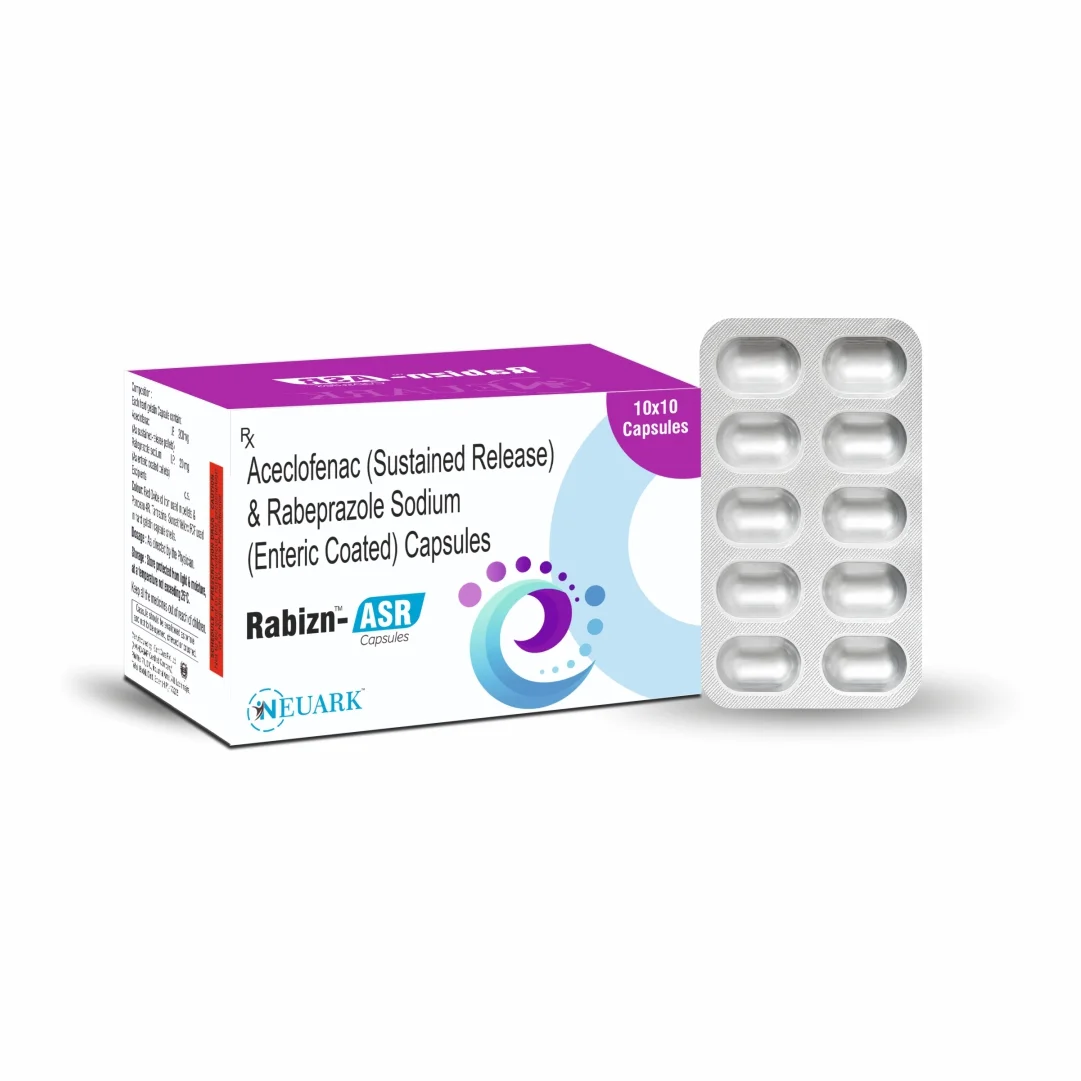
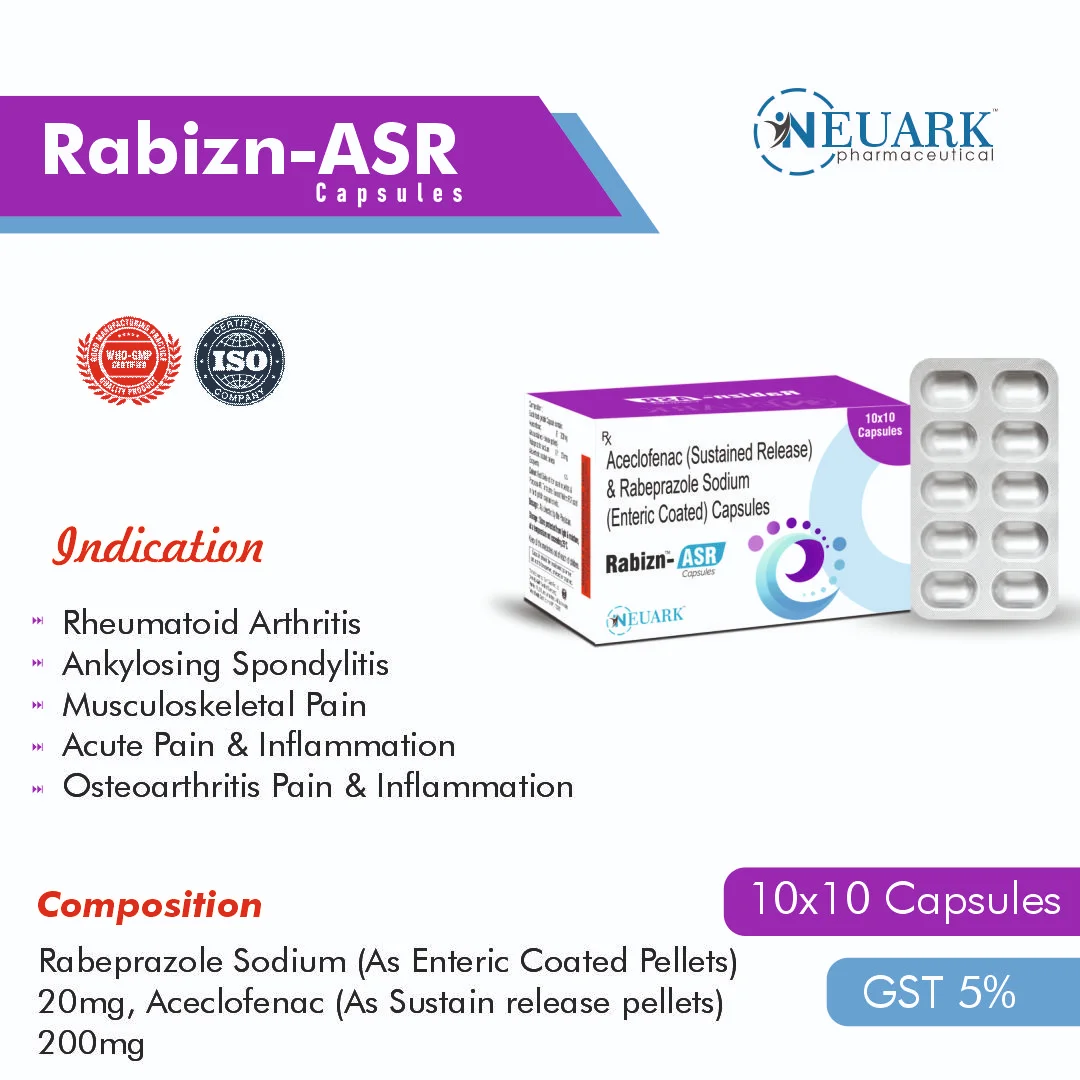
Rabizn-ASR is a combination formulation containing Rabeprazole Sodium 20 mg in enteric-coated pellets and Aceclofenac 200 mg in sustained-release pellets. The formulation combines an acid-reducing medicine with a non-steroidal anti-inflammatory drug (NSAID). Healthcare professionals may prescribe this combination when both pain and inflammation management and gastric acid reduction are clinically appropriate.
Rabeprazole helps reduce stomach acid production, while aceclofenac helps relieve pain and inflammation. However, acid suppression does not eliminate all gastrointestinal risks associated with NSAIDs.
Therapeutic Segment
Primary Segment: Pain Management and Anti-Inflammatory Care
Related Segment: Gastrointestinal Care
Rabizn-ASR may be relevant to selected prescriptions in orthopaedic and general medical practice. Its use in gynaecological care depends on the individual patient’s condition and the prescriber’s assessment.
Uses of Rabizn-ASR
A healthcare professional may prescribe Rabizn-ASR for selected conditions involving pain and inflammation, such as:
- Osteoarthritis-related pain and inflammation.
- Rheumatoid arthritis symptoms.
- Ankylosing spondylitis-related pain and stiffness.
- Other inflammatory musculoskeletal conditions when aceclofenac is considered appropriate.
- Patients who also require reduction of gastric acid secretion as part of their treatment plan.
Important: Rabizn-ASR is not suitable for every patient with pain or acidity. A healthcare professional should determine whether the combination is appropriate.
Key Benefits
- Pain and inflammation management: Aceclofenac helps reduce inflammatory pain and swelling.
- Acid reduction: Rabeprazole suppresses stomach acid production.
- Modified-release formulation: Enteric-coated and sustained-release pellets are designed to control how the ingredients are released.
- Combination convenience: Two active ingredients are provided in one dosage unit, subject to confirmation of the approved product label.
Rabeprazole may help reduce acid-related symptoms, but it does not prevent every NSAID-related complication, including gastrointestinal bleeding or ulcers.
How Rabizn-ASR Works
Rabeprazole Sodium 20 mg: Rabeprazole belongs to the proton pump inhibitor (PPI) class. It reduces stomach acid secretion by inhibiting the gastric proton pump.
Aceclofenac 200 mg: Aceclofenac is a non-steroidal anti-inflammatory drug (NSAID). It helps relieve pain and inflammation by reducing the production of prostaglandins involved in these processes.
The enteric-coated rabeprazole pellets and sustained-release aceclofenac pellets are intended to provide different release characteristics. The precise release profile and administration instructions must follow the approved product information.
Possible Side Effects
Possible side effects may include:
- Nausea or vomiting.
- Abdominal discomfort or indigestion.
- Diarrhoea or constipation.
- Dizziness or headache.
- Heartburn or other gastrointestinal symptoms.
Aceclofenac can also cause serious complications, including stomach or intestinal ulcers and bleeding, kidney problems, fluid retention, increased blood pressure, cardiovascular events, and allergic reactions. Rabeprazole may cause side effects of its own and can interact with certain medicines.
Seek urgent medical attention for black stools, vomiting blood, severe abdominal pain, chest pain, breathing difficulty, facial swelling, or a severe allergic reaction.
Important Safety Information
- Use Rabizn-ASR only under the supervision of a qualified healthcare professional.
- Avoid use in patients with a history of allergy to aceclofenac, aspirin, or other NSAIDs unless a specialist specifically determines otherwise.
- Aceclofenac may be unsuitable for patients with active or recurrent peptic ulcers, gastrointestinal bleeding, severe kidney or liver impairment, significant heart failure, or certain cardiovascular conditions.
- Avoid combining it with other NSAIDs, such as ibuprofen, diclofenac, or naproxen, unless specifically directed by a healthcare professional.
- Patients taking anticoagulants, antiplatelet medicines, corticosteroids, certain blood-pressure medicines, or diuretics should disclose these medicines to their prescriber.
- Pregnancy requires particular caution. NSAIDs can harm the developing fetus, especially from 20 weeks of pregnancy onward, and should generally be avoided from 30 weeks onward. Use during pregnancy must be assessed by a healthcare professional.
- Long-term PPI treatment may require monitoring in selected patients.
- Rabeprazole reduces stomach acid but does not remove the risk of NSAID-related ulcers, bleeding, or cardiovascular complications.
Dosage and Administration
Take Rabizn-ASR only as prescribed. The appropriate dose, frequency, duration, and administration instructions depend on the approved product label and the patient’s medical condition.
Do not crush, chew, or open the dosage unit unless the approved product instructions explicitly permit it, as doing so may affect the modified-release formulation. Do not exceed the prescribed dose or use it for longer than recommended.
Manufacturer verification required: Confirm that the listed 200 mg aceclofenac strength and sustained-release presentation match the approved formulation and product label before publishing or dispensing.
Storage Instructions
Store Rabizn-ASR according to the instructions printed on its approved packaging. Keep it in its original blister, protected from moisture and excessive heat, and out of the reach of children. Do not use the product after its expiry date or if the packaging is damaged.

Reviews
There are no reviews yet.