Every winter, the air over North India turns thick and grey, and the same complaints show up in homes across the region: a scratchy throat, a cough that will not settle, burning eyes, and children who seem to be unwell all season. These are not small inconveniences. The air pollution effects on health in India are among the most serious public health problems the country faces, and they reach far beyond the lungs.
This guide explains what polluted air does to your body, the symptoms to watch for, who is most at risk, and the practical steps you can take on a bad air day. It is written for families in Delhi NCR, Punjab, Haryana, Chandigarh and the wider Indo-Gangetic Plain, where the problem is most visible.
Polluted air carries tiny particles (PM2.5 and PM10) and gases that you breathe in with every breath. In the short term they irritate your eyes, nose, throat and airways and can trigger coughing, wheezing and breathlessness. Over months and years, regular exposure is linked to asthma, chronic lung disease, heart disease, stroke and a higher risk of early death. Children, older adults, pregnant women and people with existing heart or lung conditions are affected most.
The scale of the problem is well documented. A study in The Lancet Planetary Health estimated that air pollution was responsible for about 1.67 million deaths in India in 2019, roughly 17.8% of all deaths that year (India State-Level Disease Burden Initiative, 2020).
A later study in the same journal, published in December 2024, estimated that long-term exposure to PM2.5 above the WHO guideline level of 5 µg/m³ was linked to about 1.5 million deaths a year in India between 2009 and 2019 (Harvard T.H. Chan School of Public Health). These are modelled estimates, and they depend on which guideline is used as the benchmark.
The 2019 state-level analysis also found that Delhi had the highest per-capita economic loss from air pollution, followed by Haryana. For readers in Panchkula, Chandigarh, Mohali and nearby towns, this is not a distant statistic.
Before looking at symptoms, it helps to know what you are breathing.
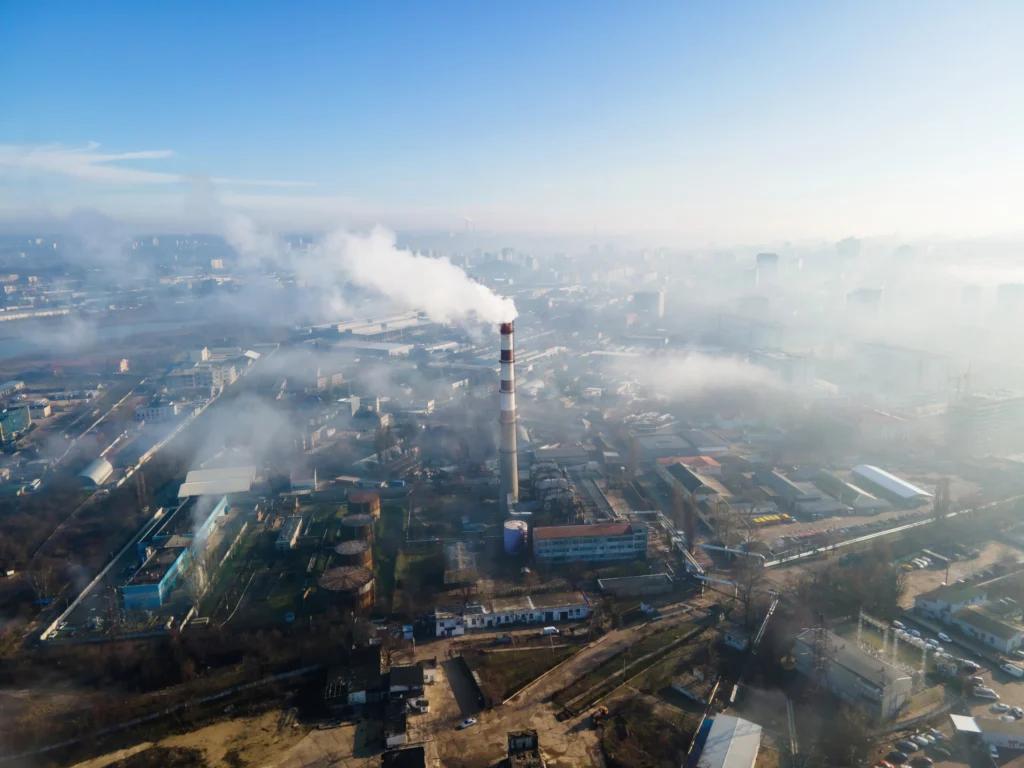
The Air Quality Index (AQI) turns these readings into one number. India’s Central Pollution Control Board (CPCB) uses these bands:
| AQI | Category | What It Means for Health |
|---|---|---|
| 0–50 | Good | Minimal impact on health. |
| 51–100 | Satisfactory | Minor discomfort for very sensitive people. |
| 101–200 | Moderate | Breathing discomfort for people with lung or heart disease, children, and older adults. |
| 201–300 | Poor | Breathing discomfort on prolonged exposure for most people. |
| 301–400 | Very Poor | Respiratory illness on prolonged exposure. |
| 401–500 | Severe | Health effects on healthy people and serious impacts on those already unwell. |
For comparison, the World Health Organization’s 2021 guidelines recommend an annual average PM2.5 level of no more than 5 µg/m³ and a 24-hour level of no more than 15 µg/m³. Many North Indian cities exceed these limits by a wide margin through the winter.
People often do not connect their symptoms with the air outside. Here is what to look for.
If you notice any warning sign, seek medical care immediately. Do not wait for the AQI to improve.
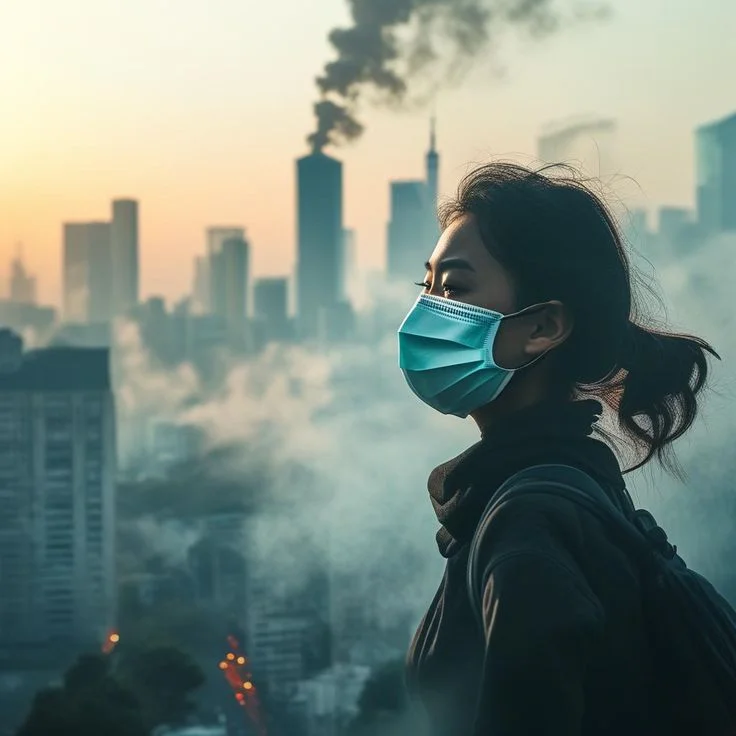
The lungs take the first hit. Fine particles inflame the airways, reduce the lungs’ ability to clear mucus and make infections more likely. Over time, this can contribute to:
Many people notice that a cold seems to “linger” through winter. When the air is poor, the airways recover more slowly, so even a minor infection can drag on.
Air pollution is not only a lung problem. Fine particles trigger inflammation throughout the body and can affect blood pressure, blood clotting and the lining of blood vessels. Research links long-term exposure with:
People who already have heart disease or diabetes should take bad air days especially seriously, and should talk to their doctor about a personal plan.

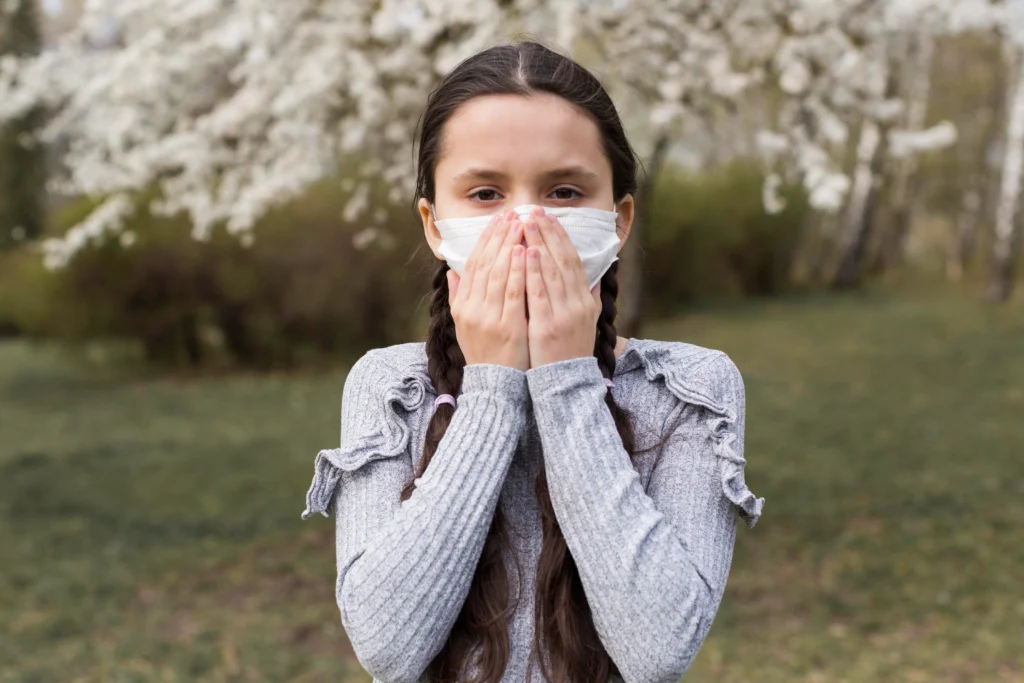
Children breathe faster than adults and spend more time outdoors, so they take in more pollutants for their body size. Their lungs and immune systems are still developing. Polluted air is linked with more coughs and chest infections, asthma, slower lung growth and more missed school days. Because young children cannot always describe how they feel, watch for fast breathing, a persistent night cough, wheezing, or reduced interest in play.
Older adults often have existing heart, lung or kidney conditions, and their bodies cope less well with added stress. A poor-AQI day can make breathlessness, fatigue and dizziness worse, and can trigger a hospital visit for those with COPD or heart disease.
Studies have linked exposure to polluted air during pregnancy with a higher risk of low birth weight and preterm birth. Pregnant women should limit time outdoors on poor-AQI days, avoid smoky areas, and speak to their gynaecologist if they have breathlessness, persistent cough or any other worrying symptom.

Several things come together from October to January across Punjab, Haryana, Delhi and Chandigarh:
This is why readers in the Tricity area often see AQI readings climb sharply as winter sets in, even when local activity has not changed.
Use the official CPCB AQI dashboard or a trusted app. Make it a habit, like checking the weather.
Link : https://cpcb.gov.in/
A cloth or surgical mask offers limited protection against fine particles. For poor-AQI days, an N95 or FFP2-rated mask gives much better filtration, but only if it fits. To check fit:
Masks are not recommended for very young children without medical guidance. Ask your paediatrician what is suitable.
None of these steps replaces cleaner air, but together they reduce how much pollution your body has to handle.
Book an appointment if:
Go to emergency care for severe breathlessness, chest pain, blue lips, fainting or confusion.
Get the Neuark Pharmaceutical Product Catalogue, Price List, and Franchise Details on WhatsApp and explore profitable PCD Pharma Franchise opportunities today.
The most common early signs are throat irritation, a dry cough, burning or watery eyes, a runny nose, headache and mild breathlessness. These often appear within hours of being outdoors on a high-pollution day.
Yes. Polluted air inflames the airways and can keep a cough going for weeks. Any cough lasting more than two to three weeks should be checked by a doctor to rule out asthma, infection or other causes.
Under the CPCB scale, an AQI above 100 can bother sensitive people, and above 200 (Poor) can affect most people with prolonged exposure. Values above 300 are Very Poor and above 400 are Severe.
PM2.5 is generally considered more harmful because the particles are small enough to reach deep into the lungs and may enter the bloodstream.
Yes. Long-term exposure is linked with heart attacks, stroke, high blood pressure and irregular heartbeat, in addition to lung disease.
Check the AQI daily, limit outdoor play on poor-AQI days, keep indoor air clean, make sure they are up to date with recommended vaccines, and see a paediatrician if they have a persistent cough, wheeze or fast breathing.
A properly fitted N95 or FFP2 mask filters out most fine particles and works much better than cloth or loose surgical masks. Fit is critical: gaps around the edges reduce protection.
Research links polluted air with a higher risk of low birth weight and preterm birth. Pregnant women should reduce exposure and talk to their doctor about any symptoms.
Disclaimer: This article is for general health awareness and is not a substitute for professional medical advice, diagnosis or treatment. If you have symptoms or a medical condition, consult a qualified doctor.
Copyright © 2026 Neuark Pharmaceutical All Rights Reserved