
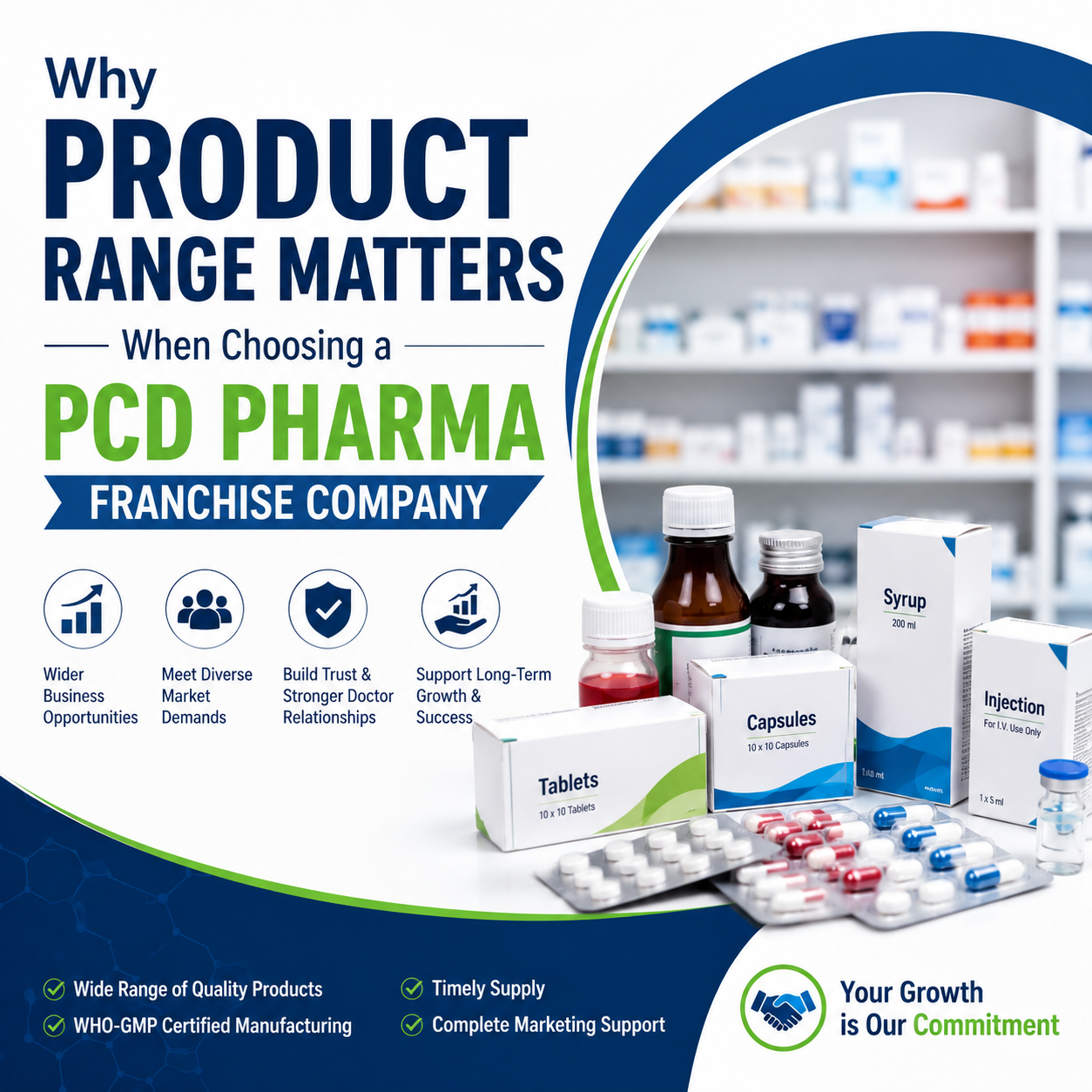
Why Product Range Matters When Choosing a PCD Pharma Franchise Company The pharmaceutical industry offers significant business opportunities for entrepreneurs, distributors, and healthcare professionals interested in the franchise model. However, choosing the right PCD pharma franchise company is one of the most important decisions that can impact long-term business success. While factors such as reputation, support, and product quality are important, one aspect that is often overlooked is the company’s product range. A strong and diversified product portfolio can help franchise partners meet varying market demands, expand their customer base, and create sustainable growth opportunities. Therefore, before partnering with a pharma franchise company, it is essential to evaluate the breadth and quality of its product range. Understanding Product Range in a PCD Pharma Franchise A product range refers to the variety of pharmaceutical products offered by a company. These may include tablets, capsules, syrups, sachets, injections, nutraceuticals, pediatric products, dermatology products, gynecology products, and more. A broader product portfolio allows franchise partners to cater to different healthcare requirements within their target markets. Moreover, healthcare professionals often prefer companies that can provide multiple healthcare solutions through a single trusted source. As a result, a diverse product range can become a strong competitive advantage. Why Product Range Matters for Franchise Success The success of a PCD pharma franchise depends on the ability to fulfill market demand effectively. When a franchise partner has access to a wide range of products, they can serve more doctors, healthcare professionals, and distributors without being limited to a small category of medicines. Furthermore, a strong product portfolio helps create more business opportunities and strengthens market presence. 1. Helps Meet Diverse Market Demands Healthcare needs vary from region to region. Some markets may have higher demand for pediatric products, while others may require nutraceuticals, dermatology products, or general healthcare medicines. A PCD pharma company with a diverse product range enables franchise partners to respond to these varying demands more effectively. Consequently, businesses can reach a larger audience and improve their growth potential. 2. Creates More Sales Opportunities One of the biggest advantages of working with a PCD pharma franchise company that offers multiple product categories is the ability to generate more sales opportunities. Instead of promoting only a few products, franchise partners can present a wider selection to healthcare professionals and distributors. This not only increases business potential but also helps strengthen professional relationship 3. Supports Long-Term Business Growth A limited product portfolio may restrict future growth opportunities. On the other hand, a company with an extensive range of pharmaceutical products allows franchise partners to expand their offerings as market needs evolve. Therefore, selecting a pharma franchise company with a strong product range can support long-term business development and sustainability. 4. Strengthens Competitive Advantage Competition in the pharmaceutical industry continues to grow every year. Franchise partners who have access to a broader product portfolio are often better positioned to compete within their markets. Moreover, healthcare professionals appreciate companies that can fulfill multiple requirements through a single business relationship. As a result, product range can become a significant factor in building a competitive advantage. 5. Enhances Customer Satisfaction Customer satisfaction plays a critical role in any business. When healthcare professionals can access a wider range of products from one source, it improves convenience and strengthens professional relationships. Furthermore, franchise partners can provide better support to their customers by offering solutions across multiple therapeutic categories. Consequently, customer satisfaction and loyalty often improve. Key Product Categories to Look For Before partnering with a PCD pharmaceutical company, evaluate whether it offers products across multiple healthcare segments. Some important categories include: General Range Products Tablets Capsules Syrups Sachets Nutraceutical Range Vitamins Minerals Health supplements Pediatric Range Pediatric syrups Children’s nutritional products Dermatology Range Skincare products Dermatology formulations Gynecology Range Women’s healthcare products Specialty Healthcare Products Advanced healthcare solutions Specialized formulations A diverse portfolio often reflects a company’s commitment to supporting various healthcare needs. How Product Range Influences Doctor Relationships Doctors prefer pharmaceutical companies that provide reliable and comprehensive healthcare solutions. When franchise partners represent a company with a strong product range, they can address multiple requirements through a single professional relationship. Moreover, healthcare professionals appreciate the convenience of working with companies that offer products across different therapeutic segments. As a result, stronger doctor relationships can contribute to long-term business success. Evaluating a PCD Pharma Franchise Company Before choosing a PCD pharma franchise company, consider the following questions: Does the company offer a diverse product portfolio? Are products available across multiple healthcare categories? Does the company regularly expand its product range? Can the product portfolio support future business growth? Does the company maintain consistency in product availability? Evaluating these factors can help franchise partners make informed business decisions. Why Product Range Reflects Company Strength A broad product range often indicates strong operational capabilities and market understanding. Companies that invest in expanding their product portfolio demonstrate a commitment to healthcare innovation and long-term growth. Furthermore, a diverse product offering allows franchise partners to remain competitive in changing healthcare environments. Therefore, product range is often a reflection of a company’s overall business strength and market vision. Conclusion Choosing the right PCD pharma franchise company involves evaluating multiple factors, but product range should always be a top consideration. A diverse portfolio helps franchise partners meet market demands, create more sales opportunities, strengthen doctor relationships, and support long-term business growth. Whether you are starting a new pharma franchise business or expanding an existing operation, partnering with a company that offers a comprehensive range of pharmaceutical products can significantly improve your chances of success. Companies such as Neuark Pharma and Medhexa Pharma Pvt. Ltd. understand the importance of offering diverse healthcare solutions that support distributors, healthcare professionals, and business partners across different market segments. Frequently Asked Questions Why is product range important in a PCD pharma franchise? A strong product range helps franchise partners meet diverse healthcare demands and create more business opportunities. What products should a pharma franchise company offer? A company should ideally offer tablets, capsules,
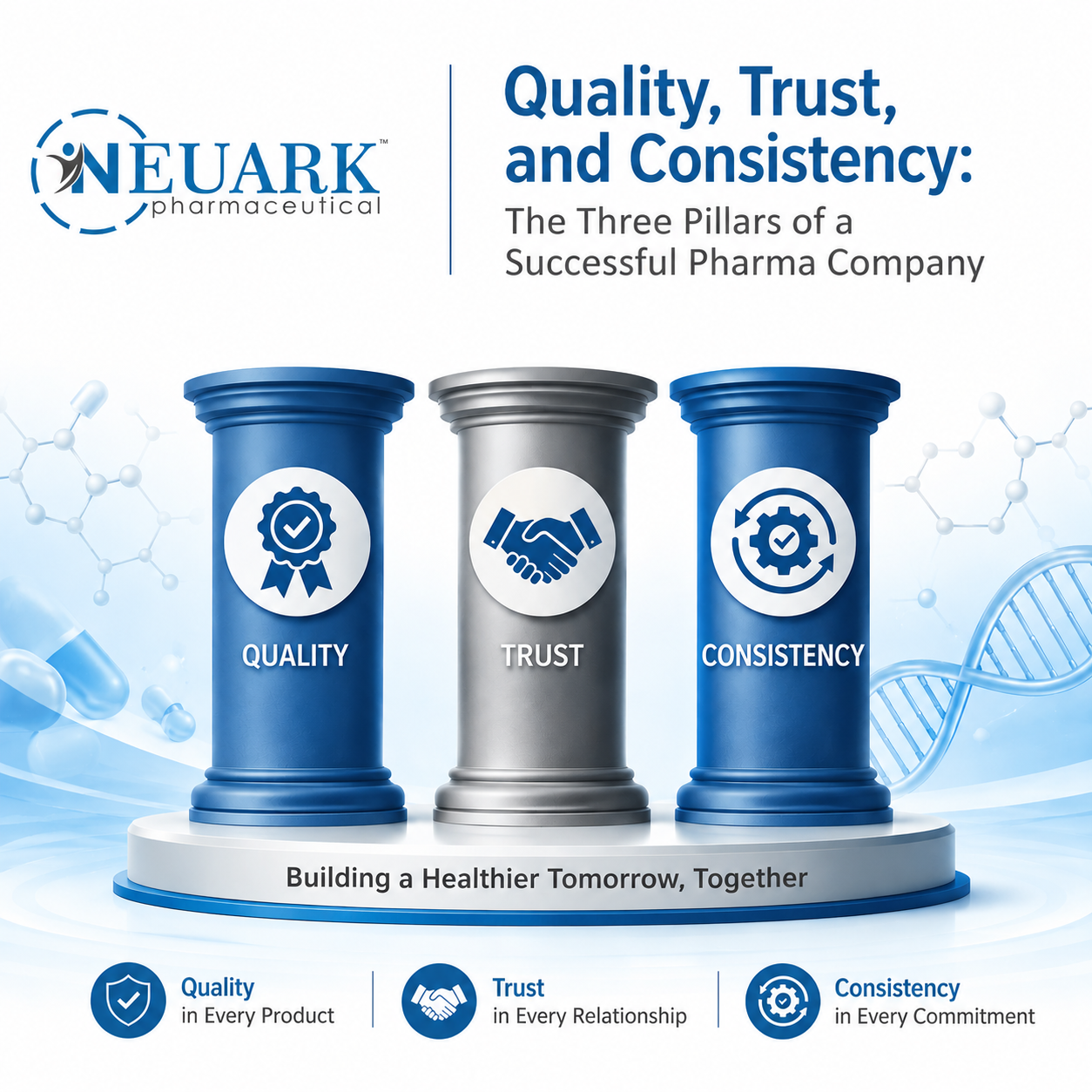
Quality, Trust, and Consistency: The Three Pillars of a Successful Pharma Company
Quality, Trust, and Consistency: The Three Pillars of a Successful Pharma Company The pharmaceutical industry plays a vital role in supporting healthcare systems and improving lives. However, in a highly competitive market, pharmaceutical companies must focus on more than just expanding their product portfolio. Long-term success depends on building a strong foundation based on quality, trust, and consistency. Healthcare professionals, distributors, and business partners prefer working with pharmaceutical companies that demonstrate reliability and professionalism. Therefore, companies that consistently deliver value are more likely to build lasting relationships and achieve sustainable growth. In this article, we explore why quality, trust, and consistency are considered the three pillars of a successful pharma company. Why Quality Matters in the Pharmaceutical Industry Quality is the foundation upon which every successful pharma company is built. Healthcare professionals expect pharmaceutical products to meet high standards of reliability and consistency. Likewise, distributors prefer working with companies that focus on quality-driven operations and professional business practices. Moreover, quality is not limited to products alone. It extends to manufacturing processes, packaging, operational systems, and customer support. Benefits of Quality-Focused Operations Stronger market reputation Increased confidence among healthcare professionals Better distributor relationships Improved customer satisfaction Long-term business growth As a result, pharmaceutical companies that consistently prioritize quality often gain a competitive advantage in the healthcare market. The Role of Trust in the Pharmaceutical Industry Trust is another essential pillar of a successful pharma company. In the healthcare sector, trust influences every business relationship. Doctors, distributors, and healthcare professionals prefer working with companies that demonstrate professionalism, reliability, and transparency. Moreover, trust takes time to build but can be lost quickly if expectations are not met. Therefore, pharmaceutical companies must focus on maintaining honest communication and dependable support. When healthcare professionals trust a pharmaceutical company, they are more likely to develop long-term partnerships. Similarly, distributors prefer companies that consistently deliver professional service and business support. As a result, trust becomes a valuable asset that contributes to long-term success and market credibility. The Role of Trust in the Pharmaceutical Industry Trust is another essential pillar of a successful pharma company. In the healthcare sector, trust influences every business relationship. Doctors, distributors, and healthcare professionals prefer working with companies that demonstrate professionalism, reliability, and transparency. Moreover, trust takes time to build but can be lost quickly if expectations are not met. Therefore, pharmaceutical companies must focus on maintaining honest communication and dependable support. When healthcare professionals trust a pharmaceutical company, they are more likely to develop long-term partnerships. Similarly, distributors prefer companies that consistently deliver professional service and business support. As a result, trust becomes a valuable asset that contributes to long-term success and market credibility. How Pharma Companies Build Trust Maintaining professional standards Providing reliable customer support Following ethical business practices Ensuring product consistency Building transparent relationships Therefore, trust is not simply a business advantage—it is a necessity in the pharmaceutical industry. Why Consistency Is Essential for Success Consistency is often the factor that transforms a good company into a successful pharma company. Healthcare professionals and distributors expect reliability in every aspect of a company’s operations. Whether it is product quality, communication, or business support, consistency helps create confidence and strengthen relationships. Furthermore, consistency allows pharmaceutical companies to build a strong brand identity. Customers and business partners naturally prefer organizations that maintain dependable performance over time. For example, when a company consistently provides quality products and professional support, healthcare professionals are more likely to continue working with that organization. Consequently, consistency contributes directly to customer retention and long-term business stability. Areas Where Consistency Matters Product quality Customer service Supply management Communication Business operations Healthcare support As a result, consistency helps pharmaceutical companies maintain a competitive advantage in a rapidly evolving market. How Quality, Trust, and Consistency Work Together Although quality, trust, and consistency are distinct concepts, they are closely connected. Quality helps establish credibility. Trust strengthens relationships. Consistency reinforces confidence. Together, these pillars create a strong foundation for sustainable growth and long-term success. For instance, quality products help build trust among healthcare professionals. Consistent performance then reinforces that trust over time. Consequently, pharmaceutical companies can strengthen their reputation and improve their market position. Moreover, organizations that successfully combine these three elements are often better equipped to adapt to industry changes and evolving healthcare needs What Healthcare Professionals Look for in a Pharma Company Healthcare professionals evaluate pharmaceutical companies based on several important factors. While product offerings are important, they also consider the company’s overall reliability and professionalism. Some of the key qualities they look for include: Consistent product quality Professional communication Reliable business support Ethical practices Strong industry reputation Long-term stability Therefore, pharmaceutical companies that focus on these areas are more likely to attract and retain valuable healthcare partnerships. conclusion Quality, trust, and consistency are the three pillars of every successful pharma company. These principles influence healthcare partnerships, strengthen brand reputation, and support long-term business growth. Quality helps establish credibility, trust builds strong relationships, and consistency reinforces confidence. Together, they create a foundation that allows pharmaceutical companies to thrive in a competitive healthcare environment. Companies such as Medhexa Pharma Pvt. Ltd. continue to focus on quality-driven healthcare solutions, professional business practices, and dependable support systems that contribute to stronger healthcare partnerships and sustainable growth. To learn more about professional healthcare solutions and pharmaceutical excellence, visit Medhexa Pharma Pvt. Ltd. at https://medhexapharma.com. Frequently Asked Questions What makes a successful pharma company? A successful pharma company focuses on quality, trust, consistency, professional support, and long-term healthcare partnerships. Why is quality important in the pharmaceutical industry? Quality helps build credibility, improve customer confidence, and strengthen healthcare relationships. How does trust influence pharmaceutical business growth? Trust supports long-term partnerships, improves reputation, and contributes to sustainable business success. Why is consistency important for pharmaceutical companies? Consistency helps maintain customer confidence, strengthen brand reputation, and improve operational reliability. Chat with us on whatsapp Click here
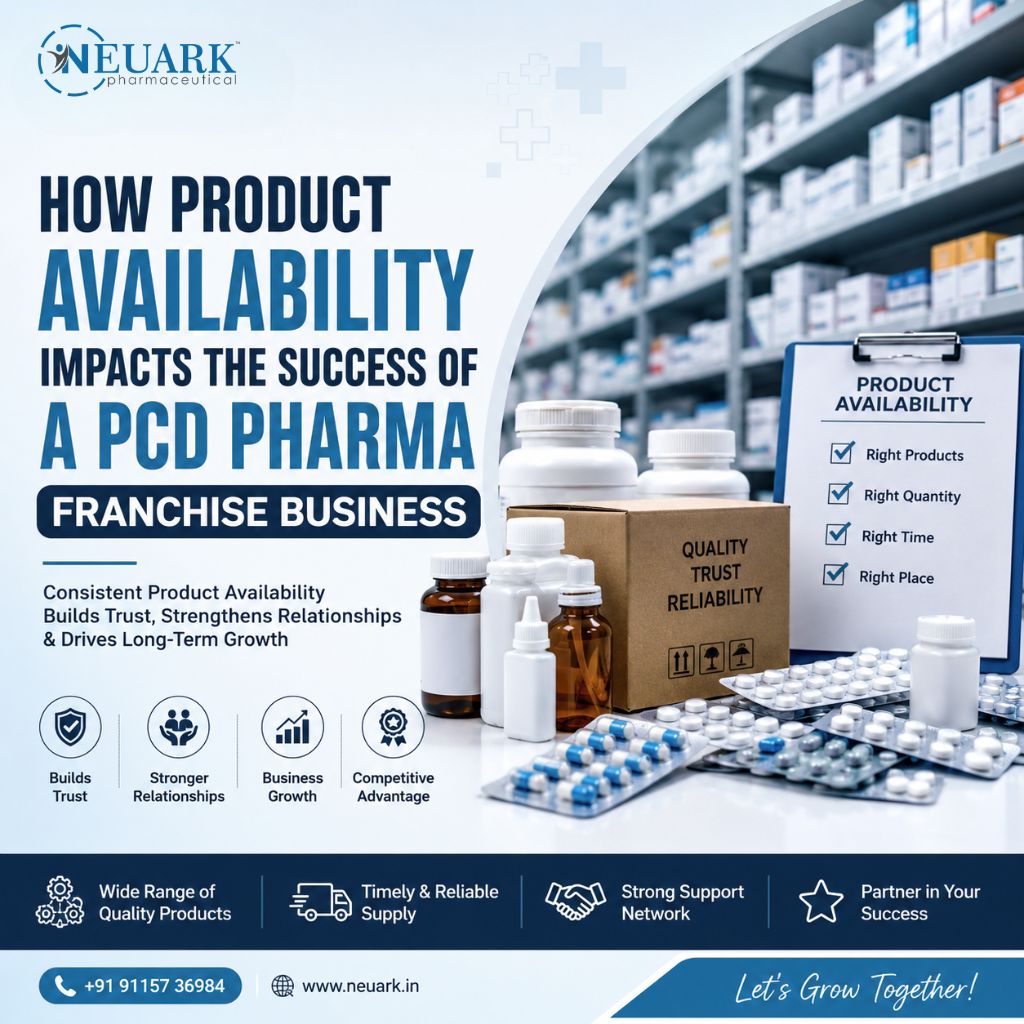
How Product Availability Impacts the Success of a PCD Pharma Franchise Business
How Product Availability Impacts the Success of a PCD Pharma Franchise Business The pharmaceutical industry is highly dependent on consistency, reliability, and timely product access. While product quality and market demand are important, one factor that significantly influences the success of a PCD pharma franchise business is product availability. Healthcare professionals, distributors, and franchise partners rely on a continuous supply of pharmaceutical products to meet customer needs. Therefore, when products are consistently available, businesses can operate more efficiently, maintain customer trust, and create long-term growth opportunities. As a result, product availability has become one of the most important factors when selecting a PCD pharma franchise company. Understanding Product Availability in the Pharmaceutical Industry Product availability refers to the ability of a pharmaceutical company to maintain a steady supply of products whenever they are needed. In a competitive healthcare market, doctors, distributors, and retailers expect timely access to medicines and healthcare products. Consequently, pharmaceutical companies that maintain organized inventory and supply systems are often preferred by franchise partners. Furthermore, reliable product availability reflects strong operational management and professional business practices. Why Product Availability Matters in a Pharma Franchise Business A successful pharma franchise business depends on meeting market demand consistently. When products are unavailable, distributors may face difficulties serving healthcare professionals and retailers. In addition, frequent stock shortages can affect customer confidence and business performance. Therefore, choosing a PCD pharma company with dependable product availability can help franchise partners maintain smooth business operations. 1. Builds Trust with Healthcare Professionals Doctors and healthcare providers prefer pharmaceutical companies that consistently supply products without interruption. When products remain available, healthcare professionals can confidently recommend them whenever needed. Moreover, dependable availability helps strengthen professional relationships and build long-term trust. As a result, franchise partners benefit from stronger healthcare networks and improved business credibility. 2. Improves Distributor Satisfaction Distributors are an essential part of the pharmaceutical supply chain. A pharma franchise company that maintains product availability helps distributors fulfill market requirements more effectively. Furthermore, timely product access reduces delays and improves customer satisfaction. Consequently, distributors are more likely to continue working with pharmaceutical companies that provide dependable support. 3. Supports Business Growth Business growth often depends on the ability to meet customer demand consistently. When a PCD pharma franchise company ensures product availability, franchise partners can focus on expanding their market reach rather than managing supply issues. Therefore, reliable product support directly contributes to long-term business growth and operational stability. 4. Strengthens Brand Reputation A pharmaceutical company’s reputation is influenced by its ability to deliver products consistently. Customers, healthcare professionals, and distributors naturally trust brands that maintain dependable product availability. In addition, reliable supply systems create a positive market perception and improve brand recognition. As a result, pharmaceutical companies can strengthen their position within the healthcare industry. Therefore, reliable product support directly contributes to long-term business growth and operational stability. 5. Creates Competitive Advantage The pharmaceutical market is highly competitive. Consequently, companies that provide uninterrupted product availability often gain an advantage over competitors. Moreover, franchise partners prefer working with ethical pharma franchise companies that demonstrate reliability, professionalism, and strong operational systems. Therefore, consistent product availability can become a valuable differentiator in the healthcare market. The Role of Supply Chain Management Behind every successful pharmaceutical franchise company is an efficient supply chain. Inventory planning, logistics coordination, and operational monitoring help ensure products remain available when needed. Furthermore, organized supply management supports better business performance and healthcare reliability. As a result, companies with strong supply systems are often better positioned to support franchise partners. How Product Availability Influences Long-Term Success Long-term success in the PCD pharma franchise sector depends on maintaining trust and business continuity. When healthcare professionals receive consistent product support, they are more likely to continue recommending products. Likewise, distributors prefer companies that help them maintain reliable market supply. Consequently, product availability becomes a key driver of sustainable business relationships and long-term growth. Why Businesses Should Evaluate Product Availability Before Choosing a Pharma Franchise Company Before partnering with a PCD pharmaceutical company, businesses should carefully assess its ability to maintain product availability. Factors to consider include: Product portfolio strength Inventory management systems Supply chain efficiency Distribution support Business reliability Furthermore, companies that prioritize product availability often provide stronger support to franchise partners and healthcare professionals. Conclusion Product availability plays a critical role in the success of a PCD pharma franchise business. From building trust with healthcare professionals to supporting distributors and strengthening brand reputation, consistent product supply influences every aspect of pharmaceutical operations. Therefore, businesses should prioritize pharmaceutical partners that focus on dependable inventory management, efficient supply systems, and long-term operational reliability. Companies such as Neuark Pharma and Medhexa Pharma Pvt. Ltd. understand the importance of professional healthcare support, reliable product availability, and quality-focused operations in building strong pharmaceutical partnerships. Frequently Asked Questions Why is product availability important in a PCD pharma franchise business? Product availability helps maintain customer satisfaction, support healthcare professionals, and ensure smooth business operations. How does product availability affect distributors? Reliable product supply allows distributors to meet market demand consistently and build stronger customer relationships. What should I look for in a PCD pharma company? Evaluate product availability, quality standards, product portfolio, business support, and operational reliability before selecting a pharma franchise partner. How does product availability impact business growth? Consistent product availability improves customer trust, reduces supply disruptions, and creates opportunities for long-term business expansion. Chat with us on whatsapp Click here

What Doctors and Distributors Really Look for in a Pharma Company
What Doctors and Distributors Really Look for in a Pharma Company The pharmaceutical industry is highly competitive, with thousands of companies offering similar products and business opportunities. However, when doctors choose medicines to prescribe and distributors decide which company to partner with, their decision goes far beyond product pricing. Trust, quality, consistency, and long-term support are the factors that truly influence partnerships. Understanding what doctors and distributors really look for in a pharma company can help pharmaceutical businesses build stronger relationships and achieve sustainable growth. In this article, we’ll explore the most important qualities that healthcare professionals and pharmaceutical distributors value when selecting a pharma company. 1. Consistent Product Quality Quality remains the most important factor for both doctors and distributors. Doctors prescribe medicines because they trust the product’s effectiveness and safety. Any compromise in quality can directly impact patient health and damage a doctor’s reputation. Similarly, distributors prefer companies that maintain consistent quality standards because quality complaints often lead to product returns, customer dissatisfaction, and financial losses. Key Indicators of Quality: WHO-GMP certified manufacturing facilities Stringent quality control processes Reliable sourcing of raw materials Consistent product performance Compliance with regulatory standards Companies that prioritize quality naturally earn long-term trust in the market. 2. Wide and Relevant Product Portfolio Doctors often treat patients with diverse healthcare needs. Therefore, they prefer pharma companies that offer a comprehensive range of products across multiple therapeutic segments. Distributors also benefit from a broader product portfolio because it allows them to serve more customers without relying on multiple suppliers. Popular Product Categories: Antibiotics Multivitamins Cardiac medicines Diabetic care products Gastrointestinal medicines Dermatology products Pediatric range Gynecology products A diverse product portfolio creates more business opportunities for everyone involved. 3. Market Reputation and Brand Trust Reputation is built over time through quality products, ethical business practices, and customer satisfaction. Doctors often feel more confident prescribing medicines from companies with a positive market image. Likewise, distributors prefer working with brands that already have market demand and recognition. Factors That Build Reputation: Positive customer feedback Strong doctor relationships Transparent business practices Consistent product availability Professional customer support A trusted pharma company becomes easier to recommend, prescribe, and distribute. 4. Reliable Product Availability Reputation is built over time through quality products, ethical business practices, and customer satisfaction. Doctors often feel more confident prescribing medicines from companies with a positive market image. Likewise, distributors prefer working with brands that already have market demand and recognition. Factors That Build Reputation: Positive customer feedback Strong doctor relationships Transparent business practices Consistent product availability Professional customer support A trusted pharma company becomes easier to recommend, prescribe, and distribute. 5. Competitive Pricing with Value While quality remains the priority, pricing still plays an important role. Doctors understand that affordability impacts patient compliance. If medicines are too expensive, patients may discontinue treatment. Distributors, on the other hand, look for healthy profit margins and competitive pricing that allows them to succeed in local markets. The ideal pharma company balances quality and affordability without compromising standards. 6. Strong Support for Distributors Successful distributors don’t just look for suppliers—they look for long-term business partners who actively contribute to their growth. A pharma company that provides marketing support, promotional materials, training, and business guidance helps distributors build stronger relationships with retailers, doctors, and healthcare professionals. This support can significantly improve market penetration and sales performance. In today’s competitive pharmaceutical market, distributors prefer companies that stand by them after the sale rather than simply supplying products. Valuable Distributor Support Includes: Visual aids and promotional materials Product training and knowledge sessions Digital marketing assistance Timely order processing Dedicated relationship managers Business growth guidance Prompt issue resolution When distributors receive consistent support, they are more likely to prioritize the company’s products and remain loyal partners for years. 7. Ethical Business Practices The pharmaceutical industry depends heavily on trust. Doctors and distributors prefer companies that operate ethically and transparently. Hidden charges, misleading claims, or inconsistent policies can quickly damage relationships. Signs of Ethical Operations: Transparent pricing Honest product information Regulatory compliance Fair business agreements Professional communication Ethical companies often build stronger and longer-lasting partnerships. 8. Effective Customer Service Responsive customer support is essential in the pharmaceutical sector. Whether it’s resolving product queries, processing orders, handling complaints, or providing documentation, fast customer service improves overall business efficiency. Doctors appreciate quick responses regarding product information, while distributors rely on efficient support for daily operations. Qualities of Excellent Customer Service: Quick response times Professional communication Problem-solving approach Dedicated support teams Timely updates Good service often becomes a key differentiator in a crowded market. 9. Innovation and Product Development Healthcare needs constantly evolve, and doctors prefer companies that keep pace with medical advancements. Pharma companies investing in innovation, research, and new product development demonstrate their commitment to improving patient outcomes. Distributors also benefit because innovative products can create fresh market opportunities and competitive advantages. 10. Long-Term Business Stability Before entering into a partnership, distributors evaluate whether a pharma company can support growth over the long term. They look for: Financial stability Consistent market presence Strong manufacturing capabilities Professional management Future expansion plans A stable company provides confidence and reduces business risk. Why Doctors and Distributors Choose Medhexa Pharma At Medhexa Pharma, we understand what healthcare professionals and distributors expect from a trusted pharmaceutical partner. Our commitment to quality manufacturing, extensive product range, ethical business practices, and customer-focused support helps us build long-term relationships across India. What Sets Medhexa Pharma Apart: Quality-assured pharmaceutical products Diverse therapeutic portfolio Competitive business opportunities Reliable supply chain management Dedicated customer support Transparent business practices Our goal is to create lasting partnerships that contribute to better healthcare outcomes and sustainable business growth. Conclusion Choosing a pharmaceutical company is an important decision for both doctors and distributors. While pricing and product range matter, long-term success depends on factors such as quality, reliability, trust, ethical practices, and professional support. Companies that consistently deliver value in these areas earn stronger relationships, better market reputation, and sustainable growth. For doctors seeking dependable products and distributors looking
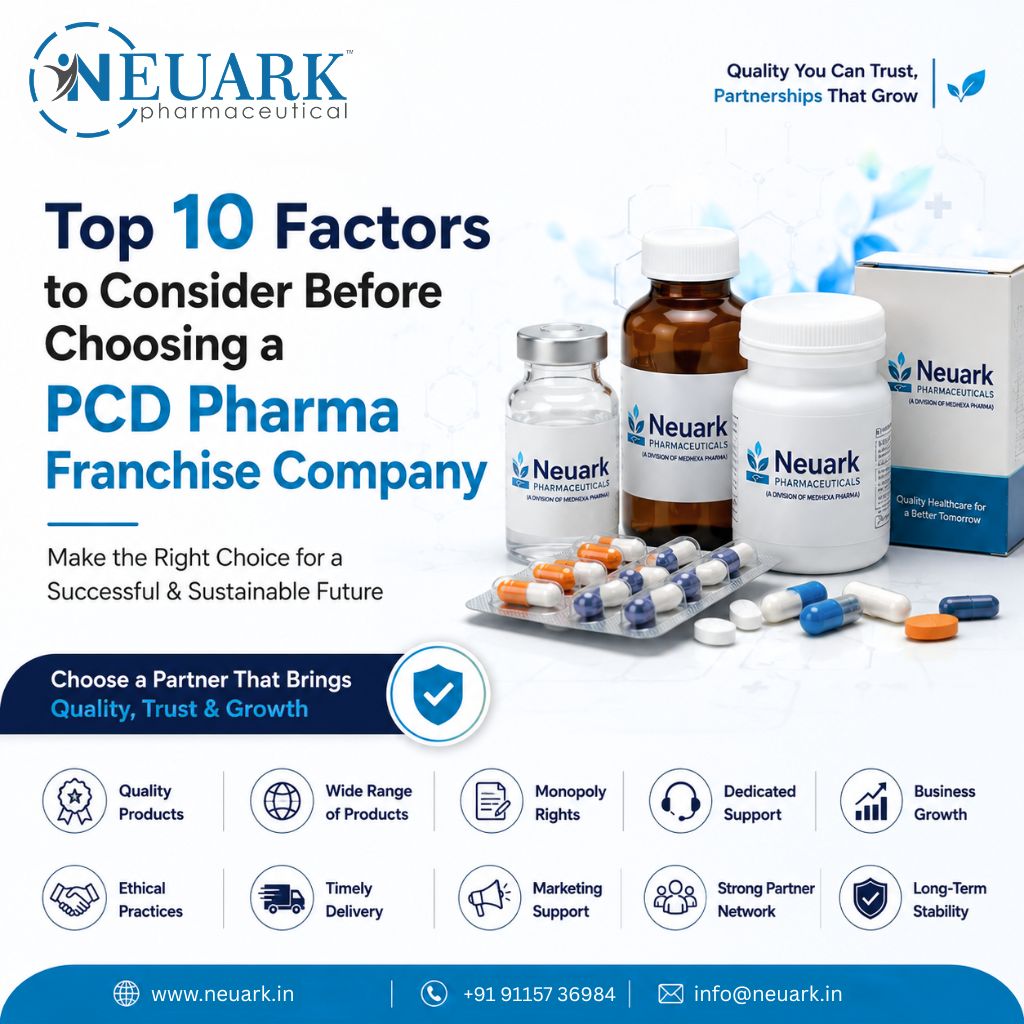
Top 10 Factors to Consider Before Choosing a PCD Pharma Franchise Company
Top 10 Factors to Consider Before Choosing a PCD Pharma Franchise Company The pharmaceutical industry in India continues to grow rapidly, creating excellent opportunities for entrepreneurs, distributors, and healthcare professionals. As a result, the demand for reliable PCD pharma franchise companies has increased significantly. However, selecting the right pharma franchise company is one of the most important decisions for long-term success. While many companies offer franchise opportunities, not all provide the same level of support, product quality, and business potential. Therefore, before investing in a pharma franchise business, it is essential to evaluate several important factors. This guide explains the top 10 factors that can help you choose the best PCD pharmaceutical company for your business goals. When evaluating a PCD pharma franchise company, businesses should also look at the company’s commitment to quality, product range, and long-term support. For example, Medhexa Pharma Pvt. Ltd. focuses on professional healthcare solutions, ethical business practices, and a diversified pharmaceutical portfolio to support franchise partners across India. 1. Company Reputation and Market Presence A company’s reputation reflects its credibility and professionalism in the pharmaceutical industry. Before partnering with a PCD pharma company, research its market presence, business history, and industry standing. Moreover, established companies often have stronger systems and better operational support. Consequently, working with a reputable company can provide greater confidence and long-term business stability. 2. Product Portfolio and Variety A diverse product range is one of the biggest advantages in the pharma franchise business. Look for a company that offers products across multiple healthcare segments such as: Tablets Capsules Syrups Injections Nutraceuticals Derma Products Cardio Diabetic Range Furthermore, a wider portfolio helps meet different market demands and creates more growth opportunities. 3. Product Quality Standards Quality is the foundation of every successful pharmaceutical business. Healthcare professionals prefer products from companies that focus on consistent quality and professional healthcare practices. Therefore, evaluating a company’s commitment to quality should always be a top priority. In addition, quality-focused companies often build stronger trust in the healthcare market. 4. Monopoly Rights and Business Opportunities Many entrepreneurs prefer a monopoly pharma franchise because it offers exclusive business opportunities in a specific region. Moreover, monopoly rights help reduce direct competition and allow franchise partners to focus on market development. As a result, businesses often experience better growth potential and stronger market positioning. 5. Ethical Business Practices An ethical pharma franchise company focuses on transparency, professionalism, and responsible business operations. Furthermore, ethical companies are more likely to build long-term relationships with healthcare professionals and distributors. Therefore, businesses should always prioritize ethical and professionally managed pharmaceutical companies. 6. Distribution and Supply Chain Support A strong supply chain is essential for smooth pharmaceutical operations. Reliable PCD pharma franchise companies ensure product availability and efficient distribution systems. Consequently, healthcare businesses can maintain consistent operations without unnecessary interruptions. In addition, dependable supply management improves customer satisfaction and business performance. Therefore, businesses should always prioritize ethical and professionally managed pharmaceutical companies. 7. Marketing and Promotional Support Marketing support can significantly influence franchise growth. Many leading pharmaceutical franchise companies provide promotional materials, visual aids, product literature, and branding support. Moreover, these resources help franchise partners build awareness and improve market visibility. 8. Business Growth Potential Before selecting a PCD pharma franchise company, evaluate its future growth opportunities. Companies with expanding product portfolios, professional operations, and strong healthcare strategies often provide better long-term business prospects. Therefore, choosing a growth-oriented partner can create lasting advantages. 9. Customer and Partner Support Professional communication and dependable support are important indicators of a reliable pharma company. Furthermore, companies that prioritize partner relationships often provide faster assistance and better business guidance. As a result, franchise partners can operate more efficiently and confidently. 10. Long-Term Vision and Stability A successful pharmaceutical franchise company should have a clear long-term vision. Future-focused companies invest in operational improvement, healthcare innovation, and sustainable business development. Consequently, franchise partners benefit from greater stability and long-term growth opportunities. Why Choosing the Right Pharma Franchise Company Matters Selecting the right PCD pharma franchise company can influence every aspect of your business journey. From product quality and market support to business growth and professional credibility, the right partner helps create a strong foundation for success. Moreover, companies that focus on ethical practices, operational excellence, and healthcare reliability are often better positioned to support franchise partners over the long term. Conclusion Choosing a PCD pharma franchise company requires careful evaluation and strategic planning. By considering factors such as company reputation, product quality, monopoly rights, ethical practices, supply chain support, and long-term vision, businesses can make more informed decisions. Neuark Pharma, a division of Medhexa Pharma, is committed to professional healthcare practices, quality-focused operations, and dependable pharmaceutical support to help build strong and successful healthcare partnerships. Choosing a PCD pharma franchise company requires careful evaluation and strategic planning. By considering factors such as company reputation, product quality, monopoly rights, ethical practices, supply chain support, and long-term vision, businesses can make informed decisions. Companies like Medhexa Pharma Pvt. Ltd. focus on professional healthcare practices, dependable pharmaceutical support, and quality-driven operations. As a result, franchise partners can benefit from stronger business opportunities, reliable product support, and long-term growth potential in the pharmaceutical industry. Frequently Asked Questions What is a PCD pharma franchise company? A PCD pharma franchise company provides pharmaceutical marketing and distribution opportunities under its brand name. Why is product quality important in a pharma franchise business? Product quality helps build trust, customer confidence, and long-term business credibility. What are monopoly rights in a pharma franchise? Monopoly rights provide exclusive business opportunities in a specific territory, helping reduce competition and support market growth. How do I choose the best PCD pharma company? Evaluate factors such as reputation, product portfolio, quality standards, business support, ethical practices, and long-term growth potential. Neuark Pharma, a division of Medhexa Pharma, is committed to professional healthcare practices, quality-focused operations, and dependable pharmaceutical support to help build strong and successful healthcare partnerships. CHAT WITH US ON WHATSAPP Click here

How to Choose the Best PCD Pharma Franchise Company in India
How to Choose the Best PCD Pharma Franchise Company in India The pharmaceutical industry in India is growing rapidly, and as a result, the demand for reliable PCD pharma franchise companies is also increasing. Today, many healthcare professionals, distributors, and entrepreneurs are searching for profitable pharma franchise business opportunities with dependable pharmaceutical partners. However, choosing the right PCD pharma company is extremely important for long-term business success. A professional pharmaceutical franchise company not only supports product availability but also helps build trust, operational stability, and business growth. Therefore, before starting a pharma franchise business, businesses should carefully evaluate quality standards, company reputation, product range, and professional support systems. What is a PCD Pharma Franchise Company? A PCD pharma franchise company provides distribution and marketing opportunities for pharmaceutical products under its brand name. These companies help distributors and healthcare businesses expand their operations through professional healthcare support and organized pharmaceutical systems. Moreover, the pharma franchise business model has become increasingly popular because it offers flexibility, business growth opportunities, and long-term healthcare market potential. Why the PCD Pharma Franchise Business is Growing A PCD pharma franchise company provides distribution and marketing opportunities for pharmaceutical products under its brand name. These companies help distributors and healthcare businesses expand their operations through professional healthcare support and organized pharmaceutical systems. Moreover, the pharma franchise business model has become increasingly popular because it offers flexibility, business growth opportunities, and long-term healthcare market potential. Important Factors to Consider Before Choosing a Pharma Franchise Company 1. Company Reputation and Professionalism Before selecting a PCD pharmaceutical company, businesses should evaluate the company’s market reputation and professional healthcare approach. Furthermore, trusted pharma franchise companies usually maintain better operational systems, reliable communication, and stronger healthcare support. 2. Product Range and Healthcare Categories A strong product portfolio is essential for business growth. Therefore, businesses should look for pharma franchise companies offering diversified healthcare categories such as: Tablets Capsules Syrups Injectables Nutraceuticals Derma Range Cardio Diabetic Range Moreover, companies with organized product categories are generally better prepared to support future healthcare demands. 3. Quality Standards and Reliability Quality remains one of the most important factors in the pharmaceutical industry. Healthcare professionals prefer working with PCD pharma companies that focus on dependable operational standards and healthcare reliability. Consequently, businesses should always choose pharmaceutical franchise companies that maintain quality-focused systems and professional healthcare practices. 4. Monopoly Rights and Business Support Many businesses prefer monopoly pharma franchise opportunities because they provide better market control and business expansion potential. In addition, professional pharma franchise companies often provide promotional support, organized distribution systems, and long-term healthcare business guidance. 5. Ethical Pharma Franchise Practices Ethical pharma franchise companies focus on professional healthcare support, transparency, and dependable operations. Therefore, businesses should prioritize companies that maintain responsible pharmaceutical practices and professional communication systems. Moreover, ethical business operations help build stronger healthcare relationships and long-term market trust. Why Product Availability Matters Reliable product availability plays a major role in pharmaceutical operations. Businesses and healthcare providers prefer PCD pharma franchise companies that maintain organized supply chain systems and dependable distribution management. Furthermore, timely support improves operational efficiency and strengthens professional business relationships. The Growing Demand for Derma and Specialty Pharma Segments Today, specialty healthcare segments such as derma pharma franchise and cardio diabetic ranges are growing rapidly in India. As a result, many businesses are now searching for: Derma PCD company opportunities Best derma PCD franchise companies Generic PCD pharma franchise support Ethical pharmaceutical franchise businesses Consequently, pharmaceutical companies with diversified healthcare divisions are becoming more competitive in the healthcare market. How Professional Pharma Companies Build Long-Term Trust Trust is one of the strongest foundations of a successful pharma franchise business. Professional pharmaceutical companies focus on: Consistent operations Reliable communication Quality-focused healthcare support Long-term business relationships Therefore, businesses are more likely to succeed when they work with dependable and professionally managed pharma franchise companies. Conclusion Choosing the best PCD pharma franchise company is essential for long-term business growth and healthcare success. From quality standards and product range to ethical practices and reliable support systems, every factor contributes to building a successful pharmaceutical franchise business. Neuark Pharma, a division of Medhexa Pharma, focuses on professional healthcare operations, dependable pharmaceutical support, and quality-driven systems to contribute toward reliable healthcare partnerships and long-term business growth. Learn more about healthcare-focused pharmaceutical solutions by visiting Medhexa Pharma FAQ What is a PCD pharma franchise company? A PCD pharma franchise company provides pharmaceutical distribution and marketing opportunities under its brand name. How do I choose the best pharma franchise company? Businesses should evaluate product quality, company reputation, healthcare support, operational reliability, and ethical business practices before choosing a pharma franchise company. Why is the pharma franchise business growing in India? The pharma franchise business is growing because of increasing healthcare demand, expanding pharmaceutical markets, and growing opportunities in professional healthcare distribution. Chat us on whatsapp Click here
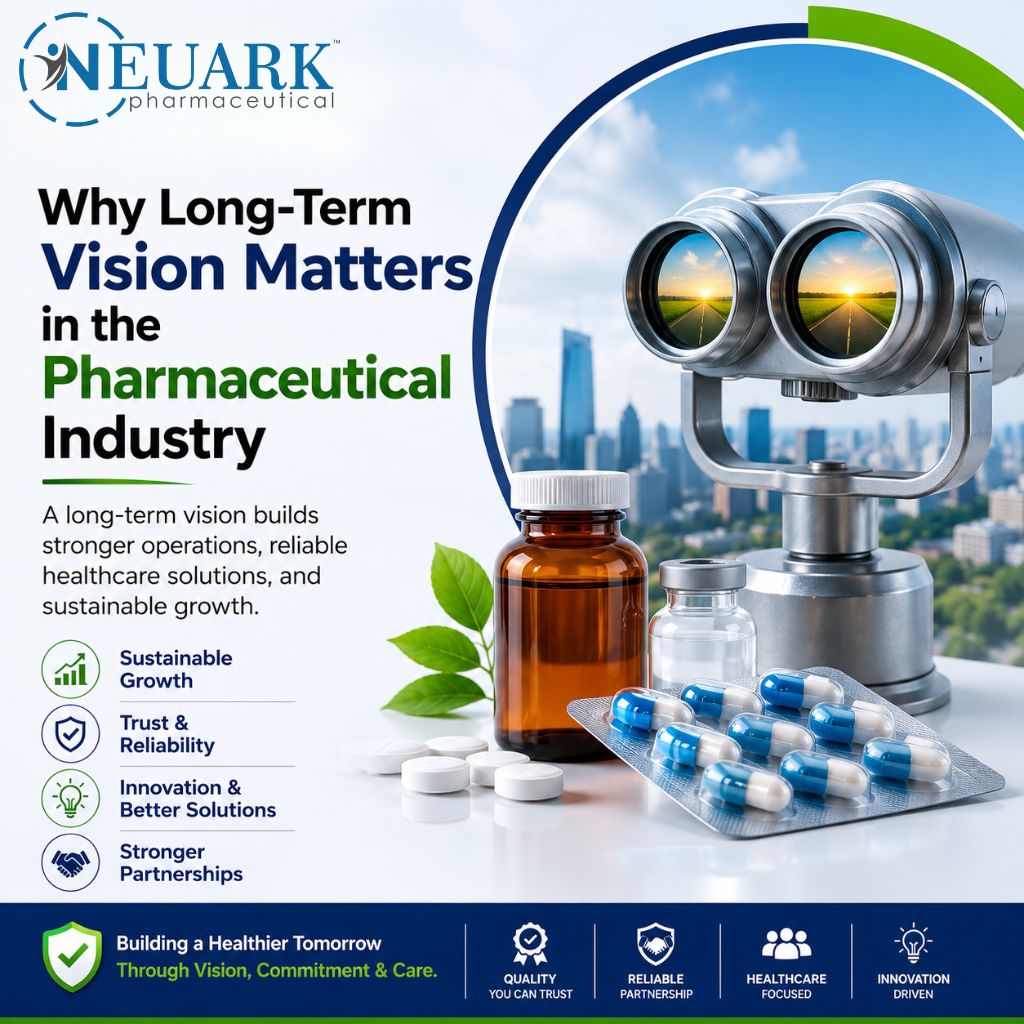
Why Long-Term Vision Matters in the Pharmaceutical Industry
Why Long-Term Vision Matters in the Pharmaceutical Industry The pharmaceutical industry continues to evolve with changing healthcare demands, technological advancements, and growing market expectations. Therefore, pharmaceutical companies must focus not only on present operations but also on long-term growth and sustainable healthcare development. A long-term vision helps pharmaceutical businesses build stability, improve operational planning, and maintain consistent healthcare support. Moreover, companies with future-focused strategies are often better prepared to adapt to industry changes and market challenges. Consequently, long-term planning has become one of the most important foundations of successful pharmaceutical businesses. Why Long-Term Vision Matters in the Pharmaceutical Industry Long-term planning helps pharmaceutical companies maintain operational consistency and professional healthcare support. In addition, it improves business stability and strengthens market credibility. Furthermore, companies with future-focused strategies are more likely to maintain dependable healthcare operations and long-term professional partnerships. Supporting Innovation and Growth Innovation plays an important role in pharmaceutical development. Companies with a long-term vision focus on improving operational systems, healthcare solutions, and professional standards. As a result, they are better prepared to meet changing healthcare needs and maintain sustainable business growth. Building Trust and Reliability Trust remains one of the most important factors in the pharmaceutical industry. Healthcare businesses prefer pharmaceutical companies that demonstrate professionalism, consistency, and dependable operational practices. Moreover, long-term planning helps companies maintain stronger healthcare relationships and improve customer confidence over time. Adapting to Changing Healthcare Needs The healthcare industry continues to change rapidly. Therefore, pharmaceutical companies must remain flexible and prepared for future healthcare requirements. Companies with a clear long-term vision are generally better equipped to manage industry challenges while maintaining operational stability and healthcare reliability. Conclusion Long-term vision is essential for sustainable growth and professional success in the pharmaceutical industry. From innovation and operational stability to healthcare trust and market credibility, future-focused planning helps pharmaceutical companies build stronger and more dependable healthcare partnerships. Neuark Pharma, a division of Medhexa Pharma, focuses on professional healthcare practices, reliable operations, and long-term pharmaceutical growth to support trusted healthcare solutions. FAQ Long-term vision is essential for sustainable growth and professional success in the pharmaceutical industry. From innovation and operational stability to healthcare trust and market credibility, future-focused planning helps pharmaceutical companies build stronger and more dependable healthcare partnerships. Neuark Pharma, a division of Medhexa Pharma, focuses on professional healthcare practices, reliable operations, and long-term pharmaceutical growth to support trusted healthcare solutions. Why is long-term vision important in the pharmaceutical industry? Long-term vision helps pharmaceutical companies maintain operational stability, support innovation, and build reliable healthcare partnerships. How does long-term planning help pharmaceutical companies grow? Long-term planning improves business stability, operational efficiency, and healthcare reliability. Why is long-term vision important in the pharmaceutical industry? Long-term vision helps pharmaceutical companies maintain operational stability, support innovation, and build reliable healthcare partnerships. How does long-term planning help pharmaceutical companies grow? Long-term planning improves business stability, operational efficiency, and healthcare reliability. Learn more about healthcare-focused pharmaceutical solutions by visiting Medhexa Pharma chat with us on whatsApp Click here

What Makes a Pharmaceutical Brand Stand Out in a Competitive Market
What Makes a Pharmaceutical Brand Stand Out in a Competitive Market The pharmaceutical industry has become increasingly competitive in recent years. As healthcare awareness continues to grow, pharmaceutical companies are focusing not only on product development but also on building strong and trustworthy brands. Therefore, creating a professional pharmaceutical identity has become more important than ever. Today, healthcare businesses, distributors, and professionals prefer working with pharmaceutical brands that demonstrate reliability, quality, and consistent operational standards. Moreover, strong pharmaceutical branding helps companies build long-term trust and market recognition. Consequently, pharmaceutical companies that prioritize professionalism and healthcare values are more likely to stand out in a competitive market. Why Branding Matters in the Pharmaceutical Industry Branding plays a major role in shaping how a pharmaceutical company is perceived in the healthcare market. A professional pharmaceutical brand creates confidence among healthcare professionals, distributors, and business partners. In addition, strong branding helps companies communicate their commitment to quality healthcare solutions and dependable operations. As a result, businesses are able to build stronger market credibility and long-term professional relationships. Quality and Consistency Build Trust One of the biggest factors that helps a pharmaceutical brand stand out is consistent quality. Healthcare businesses and professionals prefer companies that maintain dependable operational practices and quality-focused systems. Furthermore, consistency creates trust over time. When pharmaceutical companies focus on maintaining professional standards and reliable healthcare support, they are more likely to develop a strong market reputation. Professional Packaging and Brand Presentation Packaging and visual presentation also influence how pharmaceutical brands are viewed in the market. Professional packaging reflects operational standards and creates a more organized brand identity. Moreover, modern healthcare businesses often prefer pharmaceutical companies that maintain clean, professional, and trustworthy product presentation. Consequently, effective branding and packaging contribute to stronger market visibility and customer confidence. The Importance of Transparency and Ethical Practices Transparency is becoming increasingly important in the pharmaceutical industry. Companies that maintain ethical business practices and professional communication often build stronger healthcare relationships. In addition, transparent pharmaceutical operations improve business confidence and strengthen long-term partnerships. Therefore, ethical and professional behavior continues to play an important role in brand growth and healthcare credibility. Reliable Distribution and Operational Support A pharmaceutical brand must also maintain dependable supply and distribution systems. Reliable operational support helps healthcare businesses maintain smooth processes and long-term business stability. Furthermore, companies that focus on organized supply chain management and timely support are often viewed as more professional and dependable in the healthcare industry. Innovation Helps Brands Stay Competitive Modern pharmaceutical companies are increasingly focusing on innovation to improve healthcare operations and market adaptability. From improved systems to modern operational practices, innovation supports long-term growth and professional development. Moreover, innovative pharmaceutical brands are better prepared to meet changing healthcare demands and maintain stronger market relevance. Building Long-Term Healthcare Relationships Strong pharmaceutical brands focus on long-term relationships rather than short-term business goals. Professional healthcare support, dependable communication, and operational consistency help companies create stronger partnerships over time. As a result, businesses and healthcare professionals are more likely to trust pharmaceutical brands that prioritize reliability and long-term value. Digital Presence and Market Visibility In today’s digital environment, online visibility also contributes to pharmaceutical brand recognition. Professional websites, informative healthcare content, and consistent communication help pharmaceutical companies strengthen their market identity. Furthermore, digital branding helps businesses reach healthcare professionals, distributors, and potential partners more effectively. Why Trust is the Foundation of Every Pharma Brand Trust remains one of the most important elements in the pharmaceutical industry. Healthcare businesses prefer pharmaceutical companies that demonstrate professionalism, operational consistency, and dependable healthcare practices. Therefore, pharmaceutical brands that maintain quality standards, transparent communication, and responsible business operations are more likely to stand out in a highly competitive market. Conclusion Standing out in the pharmaceutical industry requires more than just market presence. Quality, professionalism, innovation, transparency, and dependable healthcare support all contribute to building a strong pharmaceutical brand. Neuark Pharma, a division of Medhexa Pharma, focuses on professional healthcare practices, quality-driven operations, and reliable pharmaceutical support to contribute toward long-term healthcare growth and trusted business relationships. FAQ Why is branding important in the pharmaceutical industry? Branding helps pharmaceutical companies build trust, improve market recognition, and strengthen professional healthcare relationships. How can pharmaceutical companies stand out in a competitive market? Pharmaceutical companies can stand out through quality standards, professional branding, reliable operations, transparency, and strong healthcare support. What role does trust play in pharmaceutical branding? Trust helps pharmaceutical brands maintain long-term relationships, market credibility, and dependable healthcare partnerships. Learn more about healthcare-focused pharmaceutical solutions by visiting Medhexa Pharma 📞 Looking for a reliable pharmaceutical partner? Connect with Neuark Pharma today to explore professional healthcare solutions, quality-focused operations, and long-term business opportunities. Click here
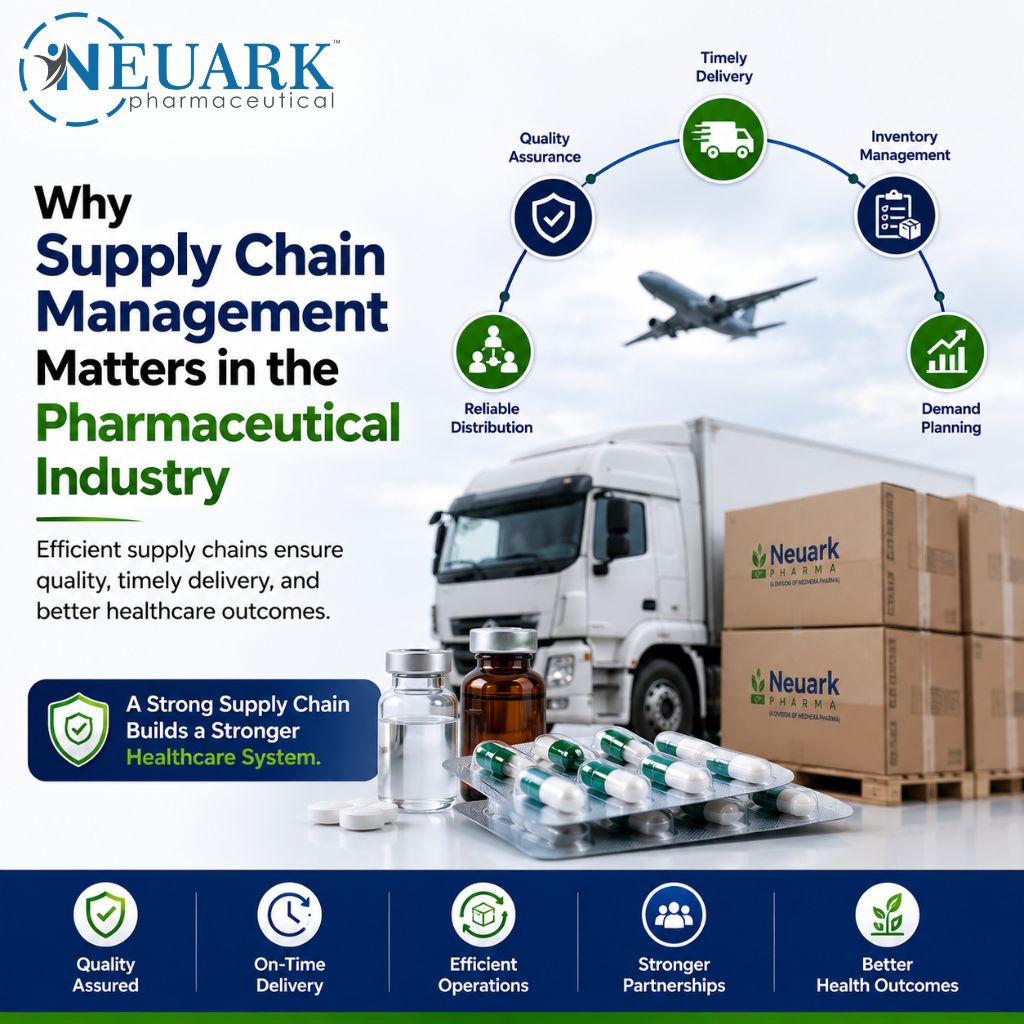
Why Supply Chain Management Matters in the Pharmaceutical Industry
Why Supply Chain Management Matters in the Pharmaceutical Industry Supply chain management plays a critical role in the pharmaceutical industry. From manufacturing and storage to transportation and distribution, every stage of the supply chain directly affects product availability and healthcare reliability. Therefore, pharmaceutical companies focus heavily on maintaining organized and dependable supply systems. As the healthcare industry continues to expand, the demand for efficient pharmaceutical operations is also increasing. Moreover, healthcare providers and distributors expect timely product availability and professional operational support. Consequently, companies that maintain strong supply chain management systems are more likely to build long-term trust and business stability. What is Pharmaceutical Supply Chain Management? Pharmaceutical supply chain management refers to the process of handling product movement from manufacturing facilities to healthcare providers, distributors, and end markets. This process includes inventory management, transportation, warehousing, and operational coordination. In addition, a professionally managed supply chain helps pharmaceutical companies maintain operational consistency and dependable healthcare support. As a result, businesses are able to improve efficiency and strengthen long-term professional relationships. Why Supply Chain Management is Important in Pharma Supply chain management is essential because pharmaceutical products must remain available, organized, and properly managed throughout the distribution process. Even small disruptions can affect product availability and healthcare operations. Therefore, pharmaceutical companies invest in professional supply management systems and organized operational practices. Furthermore, reliable supply chains help businesses maintain healthcare continuity and improve customer confidence. Ensuring Product Availability One of the biggest advantages of effective supply chain management is maintaining product availability. Pharmaceutical companies must ensure that products reach healthcare providers and distributors without unnecessary delays. Moreover, dependable product availability helps improve operational stability and strengthens business relationships. At the same time, organized inventory systems reduce supply shortages and improve distribution efficiency. Improving Operational Efficiency Efficient supply chain systems help pharmaceutical companies manage operations more effectively. For example, organized transportation and inventory management systems reduce delays and improve workflow coordination. In addition, efficient operations help businesses reduce unnecessary disruptions and maintain consistent healthcare support. Consequently, pharmaceutical companies are better prepared to meet growing market demands. Maintaining Product Quality During Distribution Product quality must remain consistent throughout storage and transportation processes. Therefore, pharmaceutical companies focus on maintaining proper handling and organized logistics systems. Furthermore, controlled distribution practices help maintain product reliability and operational consistency. As a result, businesses are able to support dependable healthcare solutions more effectively. The Role of Technology in Supply Chain Management Modern technology has significantly improved pharmaceutical supply chain operations. Digital tracking systems, inventory management tools, and automated monitoring systems help businesses maintain better operational control. Moreover, technology improves transparency and supports more accurate supply management processes. Consequently, pharmaceutical companies can respond more efficiently to changing healthcare requirements. Reducing Supply Chain Challenges The pharmaceutical industry may face supply-related challenges such as transportation delays, inventory pressure, and changing market demands. However, organized supply management systems help businesses reduce operational risks and maintain stability. In addition, strategic planning and professional coordination improve overall supply chain reliability and business continuity. Building Trust Through Reliable Distribution Reliable distribution systems help pharmaceutical companies strengthen trust among healthcare providers and business partners. Timely product availability and organized support create greater confidence in pharmaceutical operations. Furthermore, dependable supply chain management contributes to stronger long-term healthcare relationships and professional business growth. The Future of Pharmaceutical Supply Chain Management As the pharmaceutical industry continues to evolve, companies are increasingly focusing on advanced supply chain technologies and operational optimization. In the future, organized distribution systems and professional logistics management will continue to play an important role in healthcare operations. Moreover, businesses that maintain dependable supply systems are more likely to achieve sustainable growth and stronger market credibility. Conclusion Supply chain management remains one of the most important foundations of the pharmaceutical industry. From product availability and operational efficiency to reliable distribution and healthcare support, every stage of the supply chain contributes to business stability and professional growth. Neuark Pharma, a division of Medhexa Pharma, focuses on organized operations, dependable healthcare practices, and professional supply management systems to support reliable pharmaceutical solutions and long-term healthcare partnerships. Chat with us on whatsapp Click here
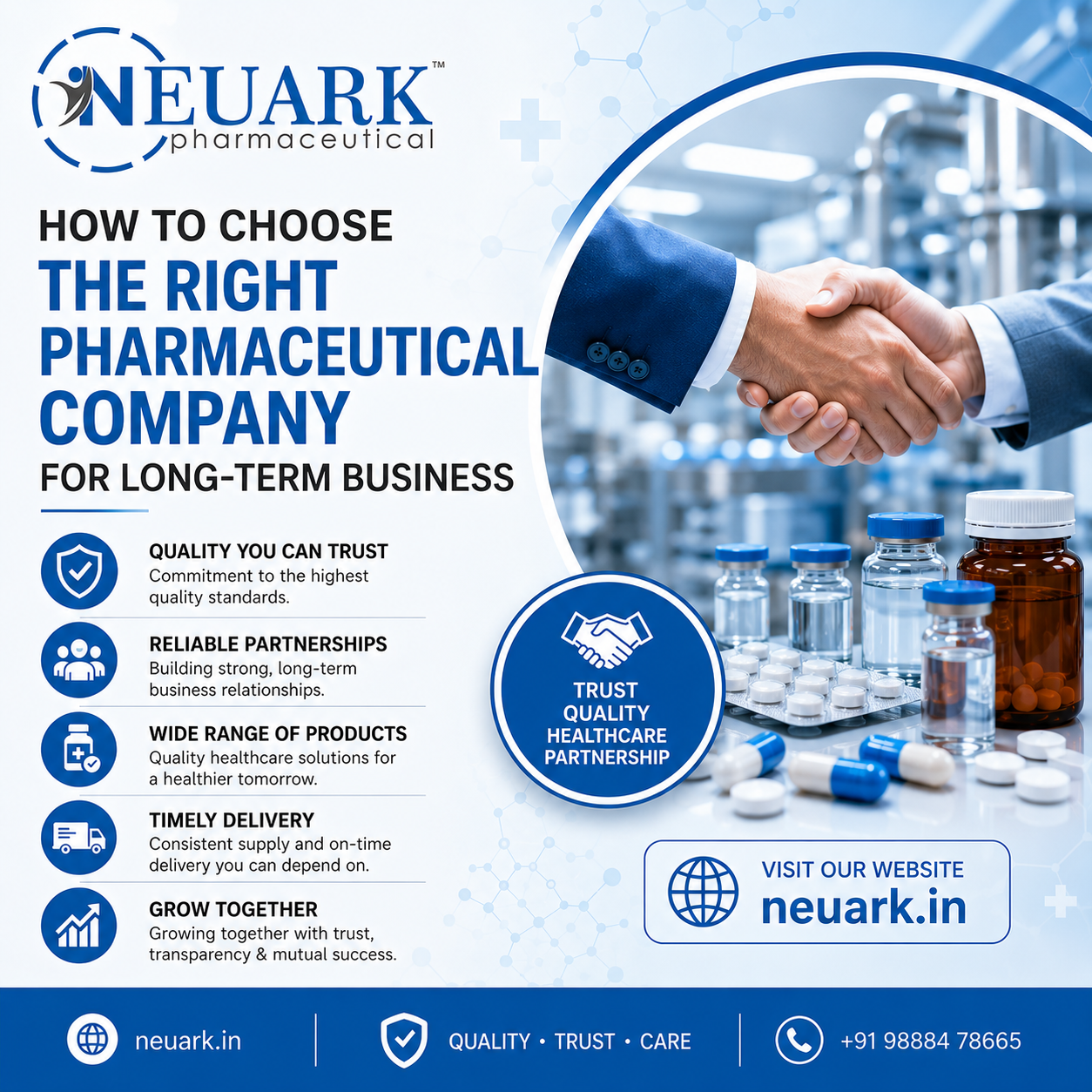
How to Choose the Right Pharmaceutical Company for Long-Term Business
How to Choose the Right Pharmaceutical Company for Long-Term Business Choosing the right pharmaceutical company is an important decision for healthcare businesses, distributors, and professional partners. A reliable pharmaceutical partner not only supports product quality but also helps maintain long-term business stability and professional growth. Today, the pharmaceutical industry is becoming more competitive and quality-focused. Therefore, businesses prefer working with companies that maintain professionalism, consistency, and dependable healthcare practices. In addition, long-term partnerships are often built on trust, transparency, and operational reliability. Why Choosing the Right Pharmaceutical Company Matters Selecting the right pharmaceutical company directly affects healthcare operations, product reliability, and business relationships. A dependable partner helps maintain smooth processes and supports long-term healthcare goals. Moreover, professional pharmaceutical companies focus on quality standards, reliable communication, and consistent operational support. As a result, businesses are able to build stronger market confidence and long-term professional relationships. Look for Quality-Focused Operations Quality should always be one of the first factors to consider when selecting a pharmaceutical company. Businesses should work with companies that focus on maintaining professional standards and dependable operational systems. Furthermore, quality-focused pharmaceutical companies are more likely to maintain product consistency and healthcare reliability. Consequently, this helps create stronger trust among healthcare professionals and distribution partners. Check Industry Experience and Professionalism Experience plays an important role in pharmaceutical operations. Companies with a professional understanding of the healthcare industry are generally better prepared to maintain operational consistency and dependable business practices. In addition, experienced pharmaceutical companies often understand market requirements more effectively and adapt to changing healthcare demands with greater confidence. Check Industry Experience and Professionalism Experience plays an important role in pharmaceutical operations. Companies with a professional understanding of the healthcare industry are generally better prepared to maintain operational consistency and dependable business practices. In addition, experienced pharmaceutical companies often understand market requirements more effectively and adapt to changing healthcare demands with greater confidence. Evaluate Product Consistency and Reliability Consistency is another important factor in long-term pharmaceutical partnerships. Reliable companies focus on maintaining stable manufacturing systems, professional quality checks, and dependable operational management. As a result, businesses can maintain greater confidence in product quality and long-term healthcare support. Transparency and Communication Matter Professional communication is essential for maintaining successful business relationships. Therefore, pharmaceutical companies should provide clear communication, responsible support, and transparent operational practices. Moreover, transparency helps businesses avoid misunderstandings and strengthens long-term professional trust. Assess Distribution and Supply Capabilities A dependable pharmaceutical company should also maintain reliable supply and distribution systems. Timely support and operational consistency are important for ensuring smooth healthcare operations. Furthermore, companies with organized supply management systems are often better prepared to handle market demands and maintain long-term reliability. Look for Ethical and Professional Practices Ethical practices continue to play an important role in the pharmaceutical industry. Companies that maintain responsible operations and professional standards are more likely to build long-term business credibility. At the same time, ethical pharmaceutical practices improve trust and strengthen healthcare partnerships across different operational levels. Importance of Long-Term Business Vision Businesses should also evaluate whether a pharmaceutical company focuses on long-term growth and healthcare development. Companies with a professional vision are generally more committed to maintaining quality, innovation, and dependable support. Consequently, long-term-focused pharmaceutical companies are better positioned to build stable and reliable healthcare partnerships. The Growing Importance of Reliable Pharma Partnerships As the pharmaceutical industry continues to expand, businesses increasingly prefer working with dependable and professionally managed pharmaceutical companies. Reliable partnerships help improve operational stability and support sustainable business growth. Moreover, strong pharmaceutical collaborations contribute to better healthcare accessibility and improved market confidence Conclusion As the pharmaceutical industry continues to expand, businesses increasingly prefer working with dependable and professionally managed pharmaceutical companies. Reliable partnerships help improve operational stability and support sustainable business growth. Moreover, strong pharmaceutical collaborations contribute to better healthcare accessibility and improved market confidence FAQ Why is it important to choose the right pharmaceutical company? Choosing the right pharmaceutical company helps maintain product reliability, professional support, and long-term business stability. What should businesses look for in a pharmaceutical company? Businesses should evaluate quality standards, operational consistency, professionalism, transparency, and reliable supply systems. How do reliable pharmaceutical partnerships support healthcare businesses? Reliable partnerships help maintain smooth operations, dependable healthcare support, and long-term professional growth. Connect With Us on WhatsApp Click here