

Revised Schedule M: How to Check If Your Pharma Manufacturer Is Really GMP-Compliant If you run a PCD franchise or buy from a third-party manufacturer, your brand carries your manufacturer’s quality. Under the revised Schedule M, that quality is now checked far more closely. Here is what changed and how to verify a manufacturer before you partner with one. What is the revised Schedule M? Schedule M is the part of India’s Drugs and Cosmetics Rules that sets Good Manufacturing Practices (GMP). The revised version brings Indian requirements closer to WHO standards. It adds a pharmaceutical quality system, quality risk management, product quality review, equipment qualification and validation, and computerised storage for drug products. Why PCD and franchise partners should care Small and medium manufacturers have had extra time to comply, and the deadline has been pushed back more than once because many units struggled with structural changes to their plant layouts. This means manufacturers are not all at the same stage of compliance. A weak manufacturer can mean supply delays, failed batches or regulatory trouble that lands on your brand. 7 checks before you choose a manufacturer Valid Manufacturing Licence Verify that the licence is valid and covers the required dosage forms, such as tablets, capsules, and syrups. GMP or WHO-GMP Certificate Check the issue date, validity, issuing authority, and the manufacturing facility covered by the certificate. Revised Schedule M Compliance Status Ask whether the facility meets the applicable revised Schedule M requirements and request supporting evidence. Quality Control Laboratory Confirm testing arrangements and request recent batch Certificates of Analysis (CoAs). Batch Records and Traceability Ensure every batch can be traced through manufacturing records to its raw materials and suppliers. Raw Material Sourcing Check how suppliers are approved and how incoming raw materials are tested and controlled. Willingness to Be Audited Choose a manufacturer willing to support a facility visit, document review, or virtual walkthrough. Red flags Reluctance to share licences or certificates Certificates with no dates, or covering a different address Prices far below the market with no explanation No clear answer about testing or batch records Frequently Asked Questions Does the revised Schedule M apply to small manufacturers? Yes. Small and medium units have had more time to comply, but the requirements apply to them too. Is a GMP certificate the same as Schedule M compliance? Not exactly. A GMP certificate is one piece of evidence. Ask what the plant has done specifically for the revised requirements. Can I visit a manufacturer’s plant before signing? You should be able to. Be cautious if a manufacturer refuses. Ready to Start Your Pharma Business? Looking for a quality-focused pharma partner in Panchkula? Share your product requirements and we’ll respond with our licence and quality documents. Start Your Franchise Journey
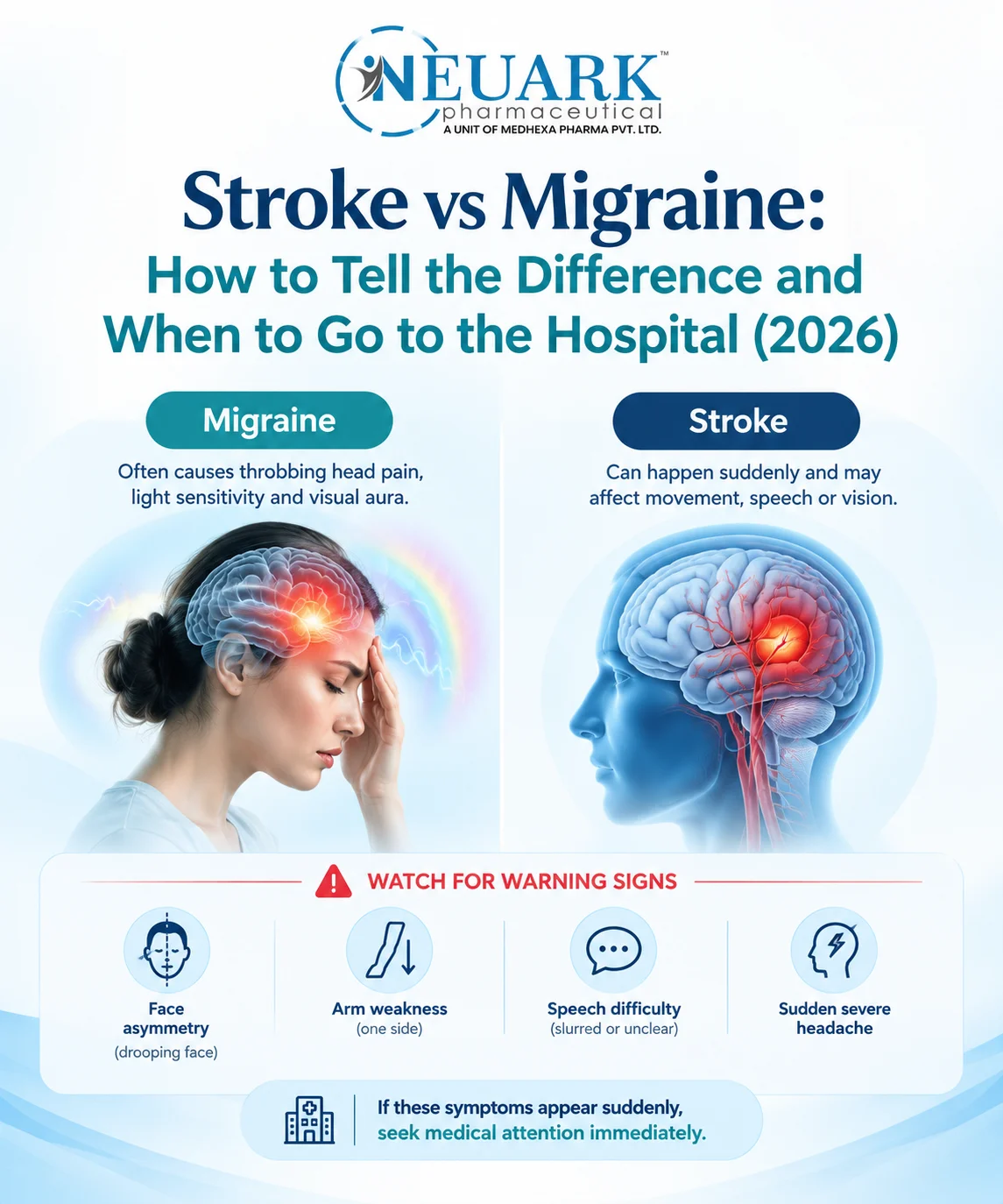
Stroke vs Migraine:How to Tell the Difference and When to Go to the Hospital (2026)
Stroke vs Migraine: How to Tell the Difference and When to Go to the Hospital (2026) A sudden, severe headache can be frightening, and it raises a hard question: is this a migraine, or is it a stroke? Both can cause pain in the head, vision changes and even numbness, which is why so many people confuse them. Knowing the key stroke vs migraine symptoms can help you act quickly when it matters most. This guide explains how each condition usually feels, the warning signs that need a hospital right away, and what to do next. It is written for families across India, where stroke is a major cause of death and long-term disability. Important: This article is for awareness only. It cannot tell you what is happening in your own body. If you are unsure, treat it as an emergency. Quick Answer: What Is the Difference Between Stroke and Migraine? Migraine symptoms usually build up gradually over minutes, often with throbbing pain, nausea and sensitivity to light and sound. A stroke usually strikes suddenly, with weakness or numbness on one side of the body, a drooping face, slurred speech or sudden loss of vision. Because the two can look alike, any sudden, new or unusual neurological symptom should be treated as an emergency until a doctor says otherwise. Emergency First: Signs That Need a Hospital Right Now Doctors use the BE-FAST checklist to spot a stroke. Go to the nearest hospital emergency department immediately if you notice any of these, especially if they come on suddenly: B – Balance: sudden loss of balance, dizziness or trouble walking E – Eyes: sudden blurred vision, double vision or loss of vision in one or both eyes F – Face: one side of the face droops or feels numb, and the smile looks uneven A – Arm (or leg): sudden weakness or numbness, usually on one side of the body S – Speech: slurred speech, trouble finding words or trouble understanding others T – Time: note the time the symptoms began, and call for emergency help at once Also treat a sudden, very severe headache that feels unlike any you have had before as an emergency, particularly if it comes with vomiting, confusion, a stiff neck or loss of consciousness. What to Do Right Away 1.Call India’s emergency number (112) or your local ambulance service. Do not wait to see if it passes. 2.Note the exact time the symptoms started and tell the medical team. 3.Do not drive yourself. Let someone else take you or wait for the ambulance. 4.Do not give food, water or any medicine unless a doctor tells you to. 5.Keep the person lying comfortably and calm until help arrives. Treatment for some strokes works best within a few hours of the first symptom, so every minute counts. What Is a Migraine? A migraine is a neurological condition that causes recurring headache attacks, often with other symptoms. It is not just a bad headache. An attack can last from several hours to a few days and can make normal activity difficult. What Is a Migraine? Throbbing or pulsing pain, often on one side of the head (it can be on both sides) Nausea or vomiting Sensitivity to light, sound or smells Feeling worse with movement, and wanting to lie down in a dark, quiet room Tiredness, mood changes or neck stiffness before or after the attack Migraine With Aura About one in three people with migraine have an aura. This is a short-lived disturbance, most often visual, that happens before or during the headache. It can include: Flashing lights, zigzag lines or shimmering spots Blind spots that slowly grow and then fade Tingling or “pins and needles” that creeps from one body part to another Temporary difficulty speaking An aura typically develops gradually over several minutes and fades within about an hour. This slow build-up is one of the clues that separates it from a stroke, but it is not a rule you should rely on at home. What Is a Stroke? A stroke happens when blood supply to part of the brain is cut off or a blood vessel in the brain bursts. Brain cells begin to die within minutes without blood and oxygen. There are two main types: Ischemic stroke: a blood clot blocks a vessel in the brain. This is the more common type. Hemorrhagic stroke: a weakened vessel bursts and bleeds into or around the brain. This is more often linked with a sudden, severe headache. Atherosclerosis stroke: happens when fatty deposits, cholesterol, inflammatory cells and other substances build up inside an artery, narrowing it or causing a blood clot that blocks blood flow to the brain. Mini-Stroke (TIA) A transient ischemic attack (TIA) causes stroke-like symptoms that go away within minutes or hours. Many people ignore it because they feel normal afterwards. A TIA is still an emergency. It can be a warning that a full stroke may follow, so get medical care even if the symptoms have passed. Why a Stroke Is a Medical Emergency The faster a stroke is treated, the more brain function can be protected. Delays are one of the biggest challenges in stroke care. Recognising the signs early and reaching a hospital with emergency and scan facilities can make a real difference to recovery. Stroke vs Migraine Symptoms: Side-by-Side Comparison The table below shows general patterns. Real cases can overlap, and only a doctor can tell them apart. Feature Migraine Stroke How it starts Gradually, over minutes to an hour Suddenly, often within seconds Headache Throbbing, often one-sided; builds up May be absent, or sudden and severe Vision changes Flashing lights, zigzag lines or spots that spread and then fade Sudden loss of vision or double vision, often without flashes Numbness or tingling Spreads slowly, often fades within an hour Sudden numbness or weakness, usually on one side Weakness Uncommon, except in rare types of migraine Common: drooping face, weak arm or leg Speech May be briefly
Air Pollution Effects on Health in India: Symptoms, Risks and What to Do (2026)
Air Pollution Effects on Health in India: Symptoms, Risks and What to Do (2026) Every winter, the air over North India turns thick and grey, and the same complaints show up in homes across the region: a scratchy throat, a cough that will not settle, burning eyes, and children who seem to be unwell all season. These are not small inconveniences. The air pollution effects on health in India are among the most serious public health problems the country faces, and they reach far beyond the lungs. This guide explains what polluted air does to your body, the symptoms to watch for, who is most at risk, and the practical steps you can take on a bad air day. It is written for families in Delhi NCR, Punjab, Haryana, Chandigarh and the wider Indo-Gangetic Plain, where the problem is most visible. Quick Answer: What Does Air Pollution Do to Your Health? Polluted air carries tiny particles (PM2.5 and PM10) and gases that you breathe in with every breath. In the short term they irritate your eyes, nose, throat and airways and can trigger coughing, wheezing and breathlessness. Over months and years, regular exposure is linked to asthma, chronic lung disease, heart disease, stroke and a higher risk of early death. Children, older adults, pregnant women and people with existing heart or lung conditions are affected most. Why Air Pollution Matters So Much in India The scale of the problem is well documented. A study in The Lancet Planetary Health estimated that air pollution was responsible for about 1.67 million deaths in India in 2019, roughly 17.8% of all deaths that year (India State-Level Disease Burden Initiative, 2020). A later study in the same journal, published in December 2024, estimated that long-term exposure to PM2.5 above the WHO guideline level of 5 µg/m³ was linked to about 1.5 million deaths a year in India between 2009 and 2019 (Harvard T.H. Chan School of Public Health). These are modelled estimates, and they depend on which guideline is used as the benchmark. The 2019 state-level analysis also found that Delhi had the highest per-capita economic loss from air pollution, followed by Haryana. For readers in Panchkula, Chandigarh, Mohali and nearby towns, this is not a distant statistic. Understanding PM2.5, PM10 and the AQI Before looking at symptoms, it helps to know what you are breathing. PM10 are particles 10 micrometres or smaller. They mostly settle in the nose and throat. PM2.5 are particles 2.5 micrometres or smaller, about 30 times thinner than a human hair. They travel deep into the lungs and some can pass into the bloodstream. This is why PM2.5 is considered the most harmful common pollutant. Gases such as nitrogen dioxide, sulphur dioxide, ozone and carbon monoxide add to the damage. The Air Quality Index (AQI) turns these readings into one number. India’s Central Pollution Control Board (CPCB) uses these bands: AQI Category What It Means for Health 0–50 Good Minimal impact on health. 51–100 Satisfactory Minor discomfort for very sensitive people. 101–200 Moderate Breathing discomfort for people with lung or heart disease, children, and older adults. 201–300 Poor Breathing discomfort on prolonged exposure for most people. 301–400 Very Poor Respiratory illness on prolonged exposure. 401–500 Severe Health effects on healthy people and serious impacts on those already unwell. For comparison, the World Health Organization’s 2021 guidelines recommend an annual average PM2.5 level of no more than 5 µg/m³ and a 24-hour level of no more than 15 µg/m³. Many North Indian cities exceed these limits by a wide margin through the winter. Symptoms of Air Pollution Exposure People often do not connect their symptoms with the air outside. Here is what to look for. Early and Mild Symptoms Dry or irritated throat Persistent cough, sometimes called a “pollution cough” Watery, red or burning eyes Runny or blocked nose and frequent sneezing Headache and a feeling of tiredness Mild breathlessness when climbing stairs or walking Moderate Symptoms Wheezing or chest tightness A cough that lasts more than two weeks Frequent throat or chest infections Worsening of asthma, allergies or sinus problems Skin irritation or itching Warning Signs That Need Medical Attention Severe breathlessness or difficulty speaking in full sentences Chest pain or pressure Blue or pale lips or fingertips Coughing up blood Fainting, confusion or extreme drowsiness A child who is breathing fast, struggling to feed or very lethargic If you notice any warning sign, seek medical care immediately. Do not wait for the AQI to improve. Air Pollution Effects on Lungs The lungs take the first hit. Fine particles inflame the airways, reduce the lungs’ ability to clear mucus and make infections more likely. Over time, this can contribute to: Asthma, both new cases and more frequent attacks in people who already have it Chronic bronchitis and COPD, where airways stay inflamed and narrowed Reduced lung function, especially in children whose lungs are still growing Respiratory infections such as bronchitis and pneumonia Lung cancer, which has been linked to long-term exposure to outdoor air pollution and also to non-smokers Many people notice that a cold seems to “linger” through winter. When the air is poor, the airways recover more slowly, so even a minor infection can drag on. Effects on the Heart and Blood Vessels Air pollution is not only a lung problem. Fine particles trigger inflammation throughout the body and can affect blood pressure, blood clotting and the lining of blood vessels. Research links long-term exposure with: Heart attacks and coronary artery disease Stroke High blood pressure Irregular heartbeat People who already have heart disease or diabetes should take bad air days especially seriously, and should talk to their doctor about a personal plan. Air Pollution Effects on Children and Older Adults Children Children breathe faster than adults and spend more time outdoors, so they take in more pollutants for their body size. Their lungs and immune systems are still developing. Polluted air is linked with more coughs and chest infections, asthma, slower lung growth and more
What Causes Nerve Pain and Tingling? Causes, Symptoms & Treatment
What Causes Nerve Pain and Tingling? Common Causes, Symptoms and Treatment Options Have you ever experienced a strange tingling, burning, numbness, or pins-and-needles sensation in your hands, feet, arms, or legs? Occasional tingling can happen when you sit or sleep in one position for too long. However, when nerve pain and tingling keep returning, last for a long time, or occur along with weakness or numbness, they may indicate an underlying nerve problem. Nerve-related symptoms can have many possible causes. Diabetes, nerve compression, injuries, certain medicines, nutritional deficiencies, alcohol-related nerve damage, infections, and other medical conditions can affect how nerves send signals throughout the body. Understanding the possible causes can help you recognize when temporary tingling is likely to pass and when it is important to seek medical advice. What Is Nerve Pain? Nerve pain, also called neuropathic pain, occurs when nerves are damaged, irritated, compressed, or otherwise affected. Unlike pain caused primarily by muscles, joints, or tissues, nerve pain can result from changes in the way nerves send signals between the body and the brain. Burning Stabbing Shooting Electric-shock-like Prickling Tingling Throbbing Numbness combined with pain Extreme sensitivity to touch Peripheral neuropathy is one condition associated with nerve damage outside the brain and spinal cord. It commonly affects the feet and hands, although symptoms can occur in other parts of the body as well. What Is Nerve Pain? Tingling is often described as a pins-and-needles sensation. You may feel: Tiny prickling sensations Mild buzzing Numbness A crawling sensation Burning or warmth Reduced sensitivity A sensation that the skin is “asleep” Temporary pins and needles commonly occur when pressure affects part of the body, such as sitting on a leg or sleeping on an arm. The sensation usually improves after the pressure is removed. However, persistent or repeatedly occurring tingling should not simply be ignored. The cause needs to be considered, particularly if other symptoms are present. What Causes Nerve Pain and Tingling? There is no single cause of nerve pain and tingling. The possible causes range from temporary nerve compression to medical conditions that require evaluation. 1. Diabetes Diabetes is one of the most important causes of peripheral neuropathy. Over time, high blood glucose and other metabolic changes associated with diabetes can damage nerves and the small blood vessels that supply them. Diabetic peripheral neuropathy commonly affects the feet and legs and can also affect the hands and arms. Possible symptoms include: Burning feet Tingling Numbness Shooting or sharp pain Reduced ability to feel temperature or injury Weakness Balance problems Because reduced sensation can make injuries harder to notice, people with diabetes should pay particular attention to foot care. 2. Nerve Compression or Pressure A nerve can become compressed or irritated when surrounding tissues put pressure on it. Examples include: Carpal tunnel syndrome affecting a nerve in the wrist A compressed nerve in the neck A compressed nerve in the lower back Sciatica-related nerve irritation The symptoms may follow the pathway of the affected nerve. For example, irritation involving nerves in the lower back can cause pain or tingling that travels down the leg. 3. Vitamin or Nutritional Deficiencies Certain nutritional deficiencies can contribute to nerve problems. Vitamin B12 deficiency is one example that healthcare professionals may consider when evaluating unexplained neurological symptoms. Other nutritional problems may also contribute depending on a person’s overall health and diet. However, it is important not to assume that tingling automatically means you need a particular vitamin supplement. The underlying cause should be assessed by a healthcare professional. 4. Injuries Nerves can be affected by physical injuries. Damage or pressure involving a nerve may lead to: Pain Tingling Numbness Weakness Changes in sensation Symptoms can depend on which nerve has been affected and the severity and location of the injury. 5. Certain Medicines or Medical Treatments Some medicines and treatments can affect nerves. For example, the NHS notes that some medicines and treatments, including certain chemotherapy medicines, can be associated with persistent pins and needles. If you develop new tingling after starting a medicine or treatment, do not stop prescribed treatment on your own. Speak with your healthcare professional about the symptoms. 6. Excessive Alcohol Use Long-term excessive alcohol consumption can contribute to nerve damage. Alcohol-related nerve problems may cause symptoms such as: Tingling Burning pain Numbness Weakness Problems with balance The NHS lists excessive alcohol consumption among possible causes of long-lasting pins and needles. 6. Excessive Alcohol Use Some infections, autoimmune disorders, inherited conditions, metabolic problems, and other illnesses can affect nerves. Peripheral neuropathy can have many possible causes, including traumatic injuries, infections, metabolic conditions, autoimmune diseases, inherited conditions, and exposure to certain toxins. This is why persistent nerve symptoms should not automatically be attributed to one cause without proper evaluation. Where Can Nerve Pain and Tingling Occur? The location of symptoms can provide useful information, although it cannot establish a diagnosis by itself. Hands and Fingers Tingling or numbness in the hands and fingers may occur because of: Nerve compression Carpal tunnel syndrome Diabetes-related nerve damage Neck-related nerve irritation Other neurological conditions Feet and Legs The feet and legs are common locations for peripheral nerve symptoms. You may experience: Burning feet Pins and needles Numbness Shooting pain Increased sensitivity to touch Difficulty sensing temperature Peripheral neuropathy often begins in the feet and may gradually extend upward. Arms and Shoulders The feet and legs are common locations for peripheral nerve symptoms. You may experience: Burning feet Pins and needles Numbness Shooting pain Increased sensitivity to touch Difficulty sensing temperature Peripheral neuropathy often begins in the feet and may gradually extend upward. Back and Legs Problems involving nerves in the lower back can sometimes produce pain or tingling that travels down the leg. Sciatica is one example in which symptoms can travel along the path of the affected nerve. Nerve Pain vs Muscle Pain: What Is the Difference? Nerve pain and muscle pain can sometimes feel similar, but they are not the same. Nerve-Related Pain Muscle-Related Pain Burning or electric sensation Aching
Essential Medicines Every Household Should Keep
Essential Medicines Every Household Should Keep A well-organized home medicine cabinet can help families handle common minor health situations without unnecessary last-minute trips to a pharmacy. However, keeping a home healthcare kit does not mean storing every medicine or using medication without proper guidance. The goal should be simple: keep a small selection of appropriate healthcare essentials, check them regularly, store them safely, and know when professional medical advice is needed. From basic fever and pain relief options to oral rehydration products and first-aid supplies, the right essentials can make a household better prepared for everyday health needs. Important: This article is for general health education. Medicine selection and use can vary according to age, medical history, allergies, pregnancy, existing medicines and other individual factors. Always read the product label and consult a doctor or pharmacist when appropriate. What Should Every Home Medicine Cabinet Have? There is no single medicine cabinet that works for every family. Children, older adults and people with ongoing health conditions may have different healthcare requirements, so the products kept at home should be selected according to the needs of the people living in the household. A well-prepared home medicine cabinet should focus on basic healthcare essentials for common, minor situations, rather than storing a large number of medicines. It can include suitable fever and pain relief options, oral rehydration products, first-aid supplies, a thermometer and other commonly needed healthcare products.It is also important to remember that not every medicine is suitable for every person. Here are some useful categories to consider. 1. Fever and Pain Relief Medicines Fever, headaches, body aches and minor pain are common reasons people reach for their home medicine cabinet. A suitable over-the-counter pain or fever medicine may be useful for some households. Paracetamol, for example, is commonly used for pain and fever, but it should always be taken according to the product label or advice from a healthcare professional. Before using any medicine, check: The active ingredient Recommended dose Age restrictions Warnings and precautions Other medicines being taken It is also important to avoid accidentally taking multiple products containing the same active ingredient. 2. Oral Rehydration Solution (ORS) ORS is an important household healthcare product, particularly when fluid and electrolyte replacement is needed because of dehydration associated with conditions such as diarrhoea or vomiting. Keeping commercially prepared ORS available can be useful for households, especially during periods when dehydration may become a concern. However, severe dehydration requires medical attention. Signs such as extreme weakness, confusion, very little urination or inability to keep fluids down should not be managed solely with a home medicine kit. 3. Basic First-Aid Supplies A home healthcare kit should contain more than medicines. Useful first-aid supplies can include: Adhesive bandages Sterile gauze Medical tape Antiseptic products Disposable gloves Clean scissors Digital thermometer Cotton or appropriate wound-cleaning materials These products can help with minor cuts, scrapes and other everyday first-aid situations. For deep wounds, uncontrolled bleeding, serious burns or significant injuries, seek prompt medical care rather than relying on a household first-aid kit. 4. Thermometer A digital thermometer is one of the simplest and most useful healthcare products to keep at home. Feeling warm does not always tell you accurately whether someone has a fever. A thermometer provides an objective temperature reading that can help you monitor changes. When using a thermometer, follow the manufacturer’s instructions and clean it appropriately after use. 5. Allergy-Relief Medicines Some households may benefit from keeping an appropriate antihistamine or other allergy-relief medicine, particularly if a family member has a history of mild seasonal or environmental allergies. However, not every allergy symptom should be treated in the same way. Always check: The active ingredient Recommended age Possible drowsiness Drug interactions Existing medical conditions For breathing difficulty, swelling of the lips or tongue, fainting or other signs of a severe allergic reaction, seek emergency medical help immediately. 6. Digestive-Health Products Occasional digestive discomfort can occur after changes in diet or other everyday circumstances. Depending on the household’s needs, a pharmacist or doctor may recommend appropriate products for issues such as occasional acidity, indigestion or diarrhoea. Rather than keeping several unnecessary medicines, it is better to choose products based on the actual needs of your household and understand how they should be used. Persistent, severe or recurring digestive symptoms should be evaluated by a healthcare professional. 7. Cough and Cold Healthcare Products Coughs and colds are common, particularly during seasonal changes. A household may keep suitable products for temporary symptom relief, but cough and cold medicines are not appropriate for everyone, especially young children. Always check the age-specific instructions and active ingredients before use. Avoid combining multiple cold products without checking whether they contain overlapping ingredients. If symptoms are severe, persistent or accompanied by breathing difficulty, chest pain or other concerning signs, medical evaluation may be necessary. 8. Prescription Medicines for Existing Conditions Prescription medicines should be handled differently from general household essentials. If a family member takes regular prescription medication for an ongoing condition, the household should maintain an adequate supply according to the prescribing doctor’s instructions. Keep these medicines: In their original labelled containers Away from children According to the recommended storage conditions Separate from medicines belonging to other family members Never share prescription medicines between family members, even when their symptoms appear similar. What Should You NOT Keep in Your Home Medicine Cabinet? A responsible medicine cabinet is not about collecting as many medicines as possible. Avoid keeping unnecessary quantities of: Expired medicines Unlabelled tablets or capsules Medicines prescribed to someone else Leftover antibiotics for future self-treatment Damaged or opened products with uncertain quality Medicines that you no longer need Unused medicines can create risks if they are accidentally taken by children or used by someone for whom they were not intended. How to Store Medicines Safely at Home Proper storage is an important part of responsible medicine use. Most medicines should be kept according to the storage instructions printed on their packaging. Many products are best stored in a
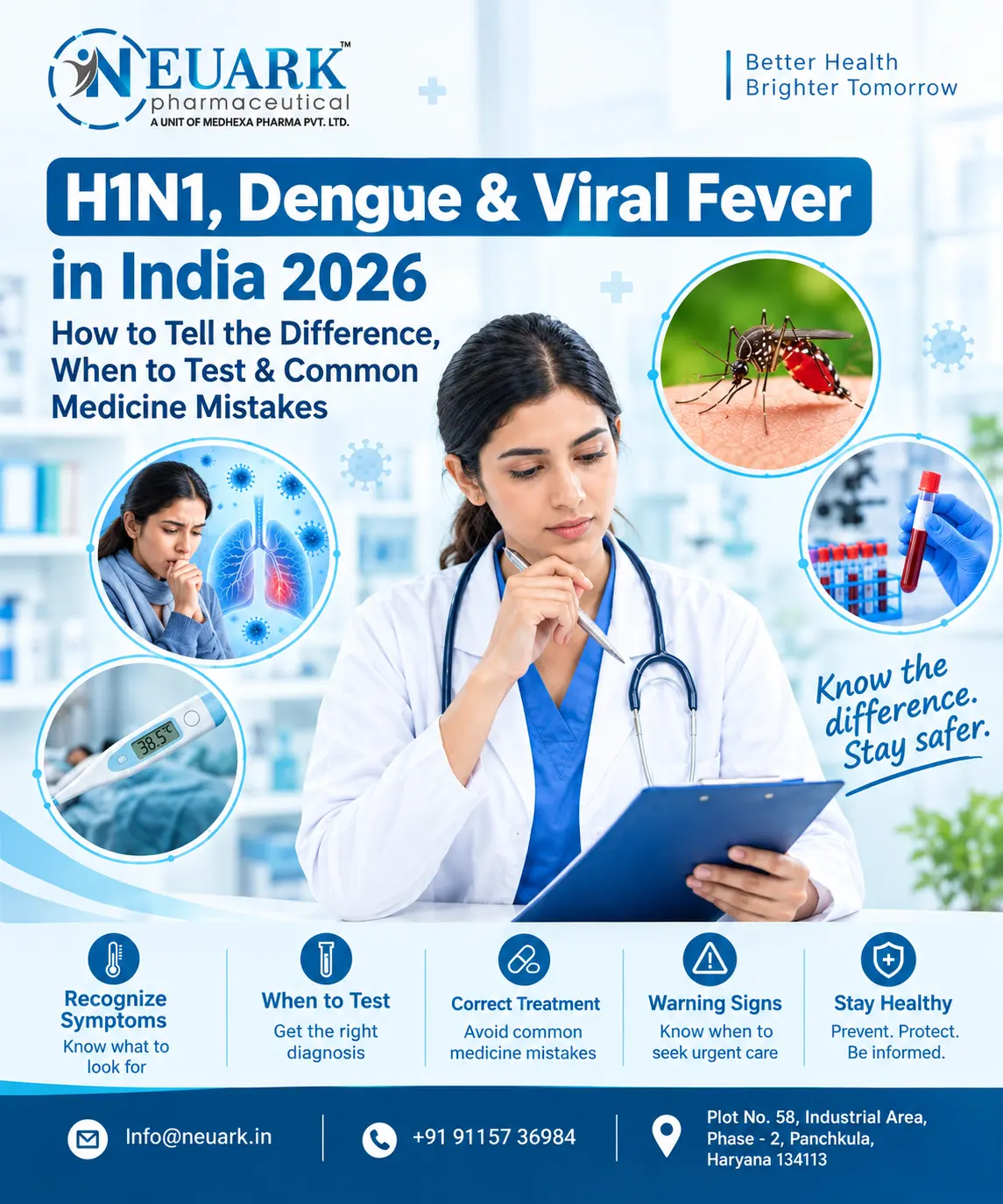
H1N1, Dengue & Viral Fever in India 2026: How to Tell the Difference, When to Test & Common Medicine Mistakes
H1N1, Dengue & Viral Fever in India 2026: How to Tell the Difference, When to Test & Common Medicine Mistakes Fever is one of the most common signs of infection, but H1N1, dengue and viral fever in India 2026 can produce overlapping symptoms. Fever, headache, body aches, weakness and fatigue may occur with several different infections, making it difficult to identify the cause based on symptoms alone. Influenza, including H1N1 influenza, commonly causes respiratory symptoms such as cough, sore throat and a runny or blocked nose along with fever, chills, headache, muscle aches and fatigue. Dengue commonly causes high fever, headache, pain behind the eyes, muscle and joint pain, nausea, vomiting and sometimes a rash. Because these illnesses can look similar during the early stage, people should avoid assuming that every fever is simply a viral fever. Appropriate medical evaluation and testing may be required depending on the symptoms, illness duration, local disease activity and individual risk factors. This guide explains the difference between H1N1, dengue and viral fever, when testing may be considered, warning signs that need medical attention and common medicine mistakes that people should avoid. H1N1, Dengue and Viral Fever: Why Can They Look Similar? Many infections produce a general immune response that causes fever, tiredness, headache and body aches. As a result, symptoms alone may not always identify the exact infection. Influenza can cause fever, chills, headache, body aches, fatigue, cough and sore throat. Dengue can also cause fever, headache, body pain, nausea and fatigue. Other viruses can produce similar flu-like symptoms. Therefore, H1N1 vs dengue should not be treated as a simple symptom checklist. The patient’s medical history, examination and appropriate diagnostic testing may all be relevant. H1N1 Symptoms in India H1N1 is a subtype of influenza A. Influenza commonly begins with symptoms such as fever, chills, headache, muscle aches, fatigue, cough, sore throat and nasal symptoms. Common H1N1 symptoms may include: Fever Chills Headache Muscle aches Fatigue and weakness Dry or nonproductive cough Sore throat Runny or blocked nose Some people, particularly children, may also experience nausea, vomiting or diarrhoea with influenza. Not everyone with influenza develops a fever. Symptoms That May Point Toward Influenza Respiratory symptoms can provide an important clue. A combination of fever or feeling feverish with cough, sore throat, nasal congestion, headache and body aches may occur with influenza. However, symptoms do not prove that a person has H1N1. Other respiratory infections can produce similar symptoms, so medical assessment may be needed. Dengue Symptoms You Should Know Dengue is a mosquito-borne viral infection. WHO reports that common dengue symptoms include high fever, headache, pain behind the eyes, muscle and joint pain, nausea, vomiting and rash. Common dengue symptoms include: High fever Severe headache Pain behind the eyes Muscle and joint pain Nausea Vomiting Rash Weakness or fatigue Dengue symptoms generally begin several days after infection and commonly last for a few days, although recovery can take longer. One important point is that the course of dengue can change as the fever decreases. A reduction in temperature does not necessarily mean that the risk has completely passed. WHO identifies severe abdominal pain, persistent vomiting, bleeding, rapid breathing, marked weakness or restlessness and other warning signs that require immediate medical attention. Because dengue is transmitted by infected mosquitoes, mosquito-bite prevention is an important part of reducing exposure. For additional practical advice, see our guide on mosquito bite prevention tips. Viral Fever Symptoms: What Does “Viral Fever” Mean? “Viral fever” is a general term commonly used for fever caused by a viral infection. It does not identify one specific virus. Depending on the infection, viral fever symptoms may include: Fever Headache Body aches Weakness Fatigue Chills Sore throat Cough Runny nose Nausea or reduced appetite Because several viral infections can cause similar symptoms, a person should not automatically assume that a fever is harmless or that antibiotics are required. The underlying cause matters because different infections may require different approaches to diagnosis and management. H1N1 vs Dengue vs Viral Fever: Key Differences The following comparison can help explain the general pattern, but it should not be used as a substitute for medical diagnosis. Feature H1N1 / Influenza Dengue Other Viral Fever Fever Common Common, often high Common Headache Common Common Possible Body aches Common Often prominent Possible Cough Common Not a typical main feature Depends on virus Sore throat Common Less typical Possible Runny/blocked nose Common Less typical Possible Pain behind eyes Less typical Characteristic symptom Possible but less specific Nausea/vomiting Possible Common Possible Rash Possible but not typical Can occur Depends on infection Mosquito exposure Not relevant to transmission Important epidemiological clue Depends on infection The overlap is significant. For example, both influenza and dengue can cause fever, headache and body aches. That is why H1N1 vs dengue cannot always be determined simply by looking at symptoms. When Should You Consider Testing for Dengue? Testing decisions should be based on clinical assessment, the duration of illness, symptoms, exposure history and local disease patterns. WHO states that laboratory confirmation is important because dengue can be difficult to distinguish clinically from other infections. Depending on the stage of illness, diagnostic approaches can include detection of viral components such as nucleic acid or NS1 antigen, while antibody testing can also support diagnosis at appropriate stages. If a person develops fever with symptoms that could be consistent with dengue, particularly in an area where dengue transmission is occurring, medical advice can help determine whether dengue testing is appropriate. Why Timing Matters for Dengue Testing Different dengue tests detect different markers of infection, and the most appropriate test can depend on how long the person has been ill. For this reason, there is no single testing approach that works identically for every patient. WHO’s current laboratory guidance recommends considering factors such as the stage of infection, specimen type and local epidemiological context when selecting tests. When Should You Consider H1N1 or Influenza Testing? Influenza testing can be useful when confirming influenza would affect clinical decision-making, infection-control

PCD Pharma Franchise vs Pharma Distributorship
PCD Pharma Franchise vs Pharma Distributorship: What Is the Difference? The pharmaceutical industry in India offers many business opportunities for entrepreneurs, wholesalers, distributors and sales professionals. Two terms that are often confused are PCD Pharma Franchise and Pharma Distributorship. Although both involve selling pharmaceutical products, their business models, responsibilities and opportunities are quite different. If you are planning to enter the pharmaceutical business, understanding the difference between a PCD Pharma Franchise and a pharma distributorship can help you choose the right model for your investment and business goals. In this blog, we will explain both business models in simple language and help you understand which option may be more suitable for you. What Is a PCD Pharma Franchise? A PCD Pharma Franchise is a business model in which a pharmaceutical company gives an individual or business the right to promote and sell its products in a particular area. The franchise partner usually receives support from the pharma company, including product supply, promotional materials and, depending on the company’s policy, monopoly rights for a specific territory. The franchise partner is responsible for developing the local market and generating orders for the company’s pharmaceutical products. For example, a PCD Pharma franchise partner may promote products to doctors, medical stores, clinics and healthcare professionals in their assigned area. The pharmaceutical company supplies the products, while the franchise partner focuses on growing the business and building a local customer network. Main features of a PCD Pharma Franchise A typical PCD Pharma Franchise opportunity may include: A wide range of pharmaceutical products Promotional and marketing support Monopoly-based business opportunities, depending on company policy Flexibility to operate within an assigned territory Business opportunities for pharma professionals and entrepreneurs Product supply from an established pharmaceutical company The exact terms can vary from one pharmaceutical company to another, so it is important to understand the agreement before starting. What Is a Pharma Distributorship? A pharma distributorship is generally focused more on the distribution and supply of pharmaceutical products. A distributor purchases products from a pharmaceutical company or supplier and distributes them through a network of retailers, wholesalers, hospitals, pharmacies or other customers. The distributor plays an important role in the pharmaceutical supply chain. Their primary responsibility is often related to inventory management, storage, logistics and product distribution. Unlike a PCD Pharma Franchise, a distributorship may require a stronger distribution infrastructure and a larger operational setup, depending on the scale of the business. PCD Pharma Franchise vs Pharma Distributorship While both models are part of the pharmaceutical industry, their approach is different. 1. Business focus The main focus of a PCD Pharma Franchise is usually marketing and business development within a particular territory. A pharma distributor is generally more focused on product distribution and supply chain management. A franchise partner works on developing demand and generating business, while a distributor ensures that products reach retailers, pharmacies and other customers efficiently. 2. Territory rights One of the major attractions of a PCD Pharma Franchise is the possibility of receiving territory or monopoly rights. Depending on the pharmaceutical company’s policies and agreement, a franchise partner may receive rights to promote products in a particular geographical area. This can help reduce direct competition from another franchise partner of the same company within that assigned territory. In a traditional distributorship model, exclusive territory rights may not always be available. Distribution arrangements can depend on the company, location and supply network. 3. Investment requirements Investment requirements can vary significantly in both business models. A PCD Pharma Franchise may be suitable for people who want to start with a comparatively focused product range and grow their business gradually. 4. Marketing responsibility In a PCD Pharma Franchise, the franchise partner usually plays a significant role in marketing and promoting pharmaceutical products. The company may provide promotional materials such as: Visual aids Product brochures MR bags Product samples Reminder cards Other marketing materials The franchise partner then uses these resources to develop their local market. In a distributorship model, the marketing responsibility may be different. The distributor may focus primarily on supplying products, while the pharmaceutical company or another sales network generates market demand. 5. Customer relationships PCD Pharma franchise partners often build direct relationships with doctors, clinics, pharmacies and healthcare professionals. Strong local relationships can play an important role in developing a successful franchise business. A pharma distributor may have stronger relationships with retailers, wholesalers, pharmacies and other businesses involved in the supply chain. Both relationships are valuable, but the customer networks can be different. Ready to Start Your Pharma Business? Get the Neuark Pharmaceutical Product Catalogue, Price List, and Franchise Details on WhatsApp and explore profitable PCD Pharma Franchise opportunities today. Start Your Franchise Journey Frequently Asked Questions About Monsoon Health 1. What is the difference between a PCD Pharma Franchise and Pharma Distributorship? A PCD Pharma Franchise mainly focuses on promoting pharmaceutical products and developing a particular territory. Pharma distributorship generally focuses on purchasing, storing and supplying pharmaceutical products to pharmacies, retailers and other customers. 2. Is PCD Pharma Franchise a good business opportunity? A PCD Pharma Franchise can be a suitable business opportunity for entrepreneurs interested in pharmaceutical marketing and territory-based business. Success depends on factors such as market demand, product selection, business planning and consistent marketing. 3. What are the benefits of a PCD Pharma Franchise? Some potential benefits include territory-based opportunities, pharmaceutical product support, promotional materials and the opportunity to develop your own local customer network. Terms and support vary between pharmaceutical companies. 4. How much investment is required for a PCD Pharma Franchise? The investment depends on the pharmaceutical company, product range, territory, initial stock and other business requirements. It is best to discuss your budget and requirements with the company before starting. 5. Can I get monopoly rights with a PCD Pharma Franchise? Some pharmaceutical companies offer monopoly or exclusive territory rights to franchise partners. Availability depends on the territory and the company’s policies and agreement. Conclusion Choosing between a PCD Pharma Franchise and Pharma Distributorship depends on
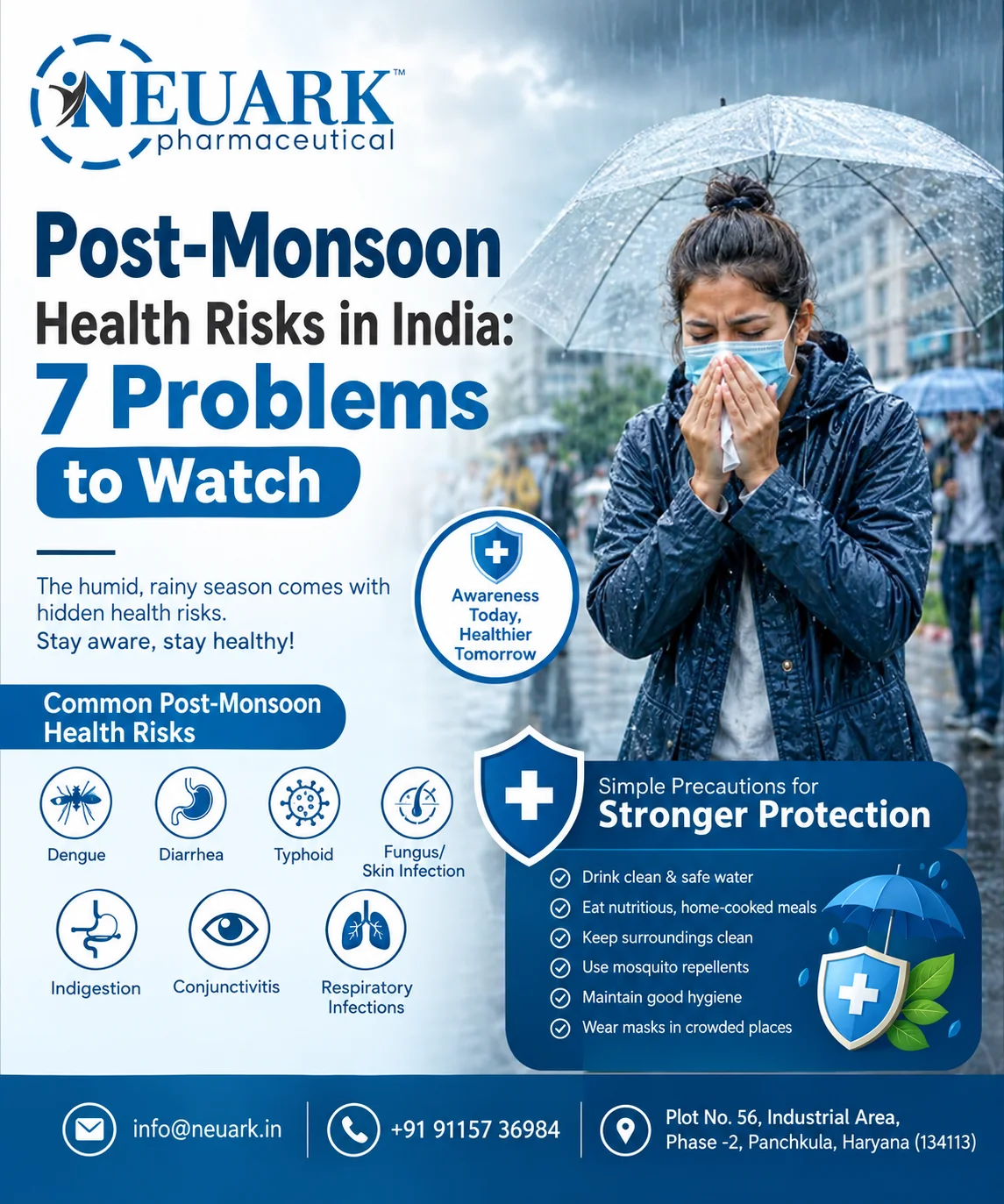
Post-Monsoon Health Risks in India: 7 Problems to Watch
Post-Monsoon Health Risks in India: 7 Problems to Watch After the Rains The end of the monsoon does not always mean the end of seasonal health problems. In India, the weeks after heavy rainfall can continue to bring health challenges because stagnant water, humidity, contaminated water sources, mosquitoes and sudden weather changes may create favorable conditions for infections and other illnesses. From mosquito-borne diseases and stomach infections to respiratory problems and skin conditions, understanding common post-monsoon health risks in India can help individuals and families take sensible preventive measures. Here are 7 common health problems to watch after the monsoon season, along with practical ways to reduce risk. 1. Dengue and Other Mosquito-Borne Diseases Dengue remains one of the important mosquito-borne diseases to watch during and after the rainy season. The Aedes mosquito that transmits dengue can breed in small collections of stagnant water around homes, workplaces and other populated areas. According to India’s National Centre for Vector Borne Diseases Control (NCVBDC), dengue is a mosquito-borne viral disease transmitted by infected Aedes mosquitoes. The agency’s current information also notes that dengue has been reported across most Indian states and Union Territories. Common symptoms may include: Sudden fever Headache Muscle and joint pain Weakness Nausea Skin rash in some cases A person experiencing symptoms that could indicate dengue or another serious infection should seek medical advice rather than self-medicating. How to reduce the risk: Remove stagnant water from containers, coolers and flowerpots. Keep water-storage containers properly covered. Use mosquito screens or repellents where appropriate. Wear clothing that reduces exposed skin. Keep surroundings clean and free from unnecessary water-holding objects. The WHO also recommends reducing mosquito breeding sites and protecting against mosquito bites as important measures against Aedes-borne diseases. 2. Malaria and Other Vector-Borne Infections Mosquito activity can remain a concern after rainfall because water accumulation may create breeding opportunities. Malaria is transmitted by Anopheles mosquitoes and remains an important public-health concern in parts of India. India’s current vector-borne disease programme continues to focus on malaria, dengue, chikungunya and other mosquito-borne diseases. Watch for symptoms such as: Fever with chills Sweating Headache Body weakness Muscle aches Recurrent episodes of fever Because several infections can produce similar early symptoms, diagnosis by a healthcare professional is important. Avoid taking antibiotics or antimalarial medicines without appropriate medical advice. 3. Water-Borne and Food-Borne Infections Heavy rainfall and flooding can affect water quality and sanitation. Contaminated drinking water or improperly handled food may increase the risk of gastrointestinal infections. Possible problems include diarrhoea, vomiting, abdominal discomfort and other gastrointestinal illnesses. WHO identifies diarrhoeal diseases and several other infections as important health risks associated with poor water, sanitation and hygiene conditions. Simple precautions can make a difference: Drink safe, treated or properly boiled water. Wash hands before eating and preparing food. Wash fruits and vegetables thoroughly. Avoid food that has been stored improperly. Keep drinking-water containers clean and covered. Maintain good kitchen and toilet hygiene. If diarrhoea or vomiting is severe, persistent or accompanied by signs of dehydration, medical attention should be considered promptly. 4. Respiratory Infections During Weather Changes Post-monsoon weather can bring fluctuating temperatures, changing humidity and increased indoor crowding. These conditions can coincide with respiratory illnesses such as common viral respiratory infections. Symptoms may include: Cough Sore throat Runny or blocked nose Mild fever Fatigue Headache Not every cough or fever requires antibiotics. Antibiotics are designed to treat certain bacterial infections and do not work against viral infections. A healthcare professional can help determine whether testing or treatment is necessary. Good ventilation, regular hand hygiene, adequate rest and avoiding close contact when unwell can help reduce the spread of respiratory infections. How to Stay Healthy After the Monsoon Simple precautions can help reduce post-monsoon health risks: Keep your surroundings clean and remove stagnant water. Drink safe water and maintain proper food hygiene. Wash your hands regularly. Use mosquito protection such as repellents and screens. Get medical advice for persistent or worsening symptoms. When Should You Consult a Doctor? Consult a healthcare professional if you experience: Persistent or high fever Severe weakness or dehydration Difficulty breathing Persistent vomiting Severe abdominal pain Unusual bleeding Confusion or worsening symptoms Early medical evaluation can help identify the cause and ensure appropriate treatment. Ready to Start Your Pharma Business? Get the Neuark Pharmaceutical Product Catalogue, Price List, and Franchise Details on WhatsApp and explore profitable PCD Pharma Franchise opportunities today. Start Your Franchise Journey Frequently Asked Questions About Monsoon Health 1. What are the common post-monsoon health problems in India? Common problems include dengue, malaria, water-borne infections, respiratory infections, skin infections and illnesses related to contaminated water. 2. Why does dengue remain a concern after the monsoon? Stagnant water left behind after rainfall can provide breeding sites for mosquitoes that transmit dengue. 3. How can I prevent post-monsoon infections? Maintain good hygiene, drink safe water, avoid stagnant water, protect yourself from mosquitoes and eat properly handled food. 4. When should I see a doctor after developing a fever? Seek medical advice if fever is persistent or accompanied by severe weakness, dehydration, breathing difficulty, vomiting, abdominal pain or unusual bleeding. 5. Can post-monsoon health problems be prevented? Many seasonal health risks can be reduced through proper hygiene, mosquito control, safe food and water, healthy habits and timely medical care. Conclusion Post-monsoon health risks can be reduced with simple preventive measures. Maintaining hygiene, drinking safe water, preventing mosquito breeding and paying attention to unusual symptoms can help protect you and your family. Stay alert, follow healthy habits and seek medical advice when needed. Disclaimer: This article is for general health awareness only and does not replace professional medical advice or treatment. Chat with us on whatsapp Click here
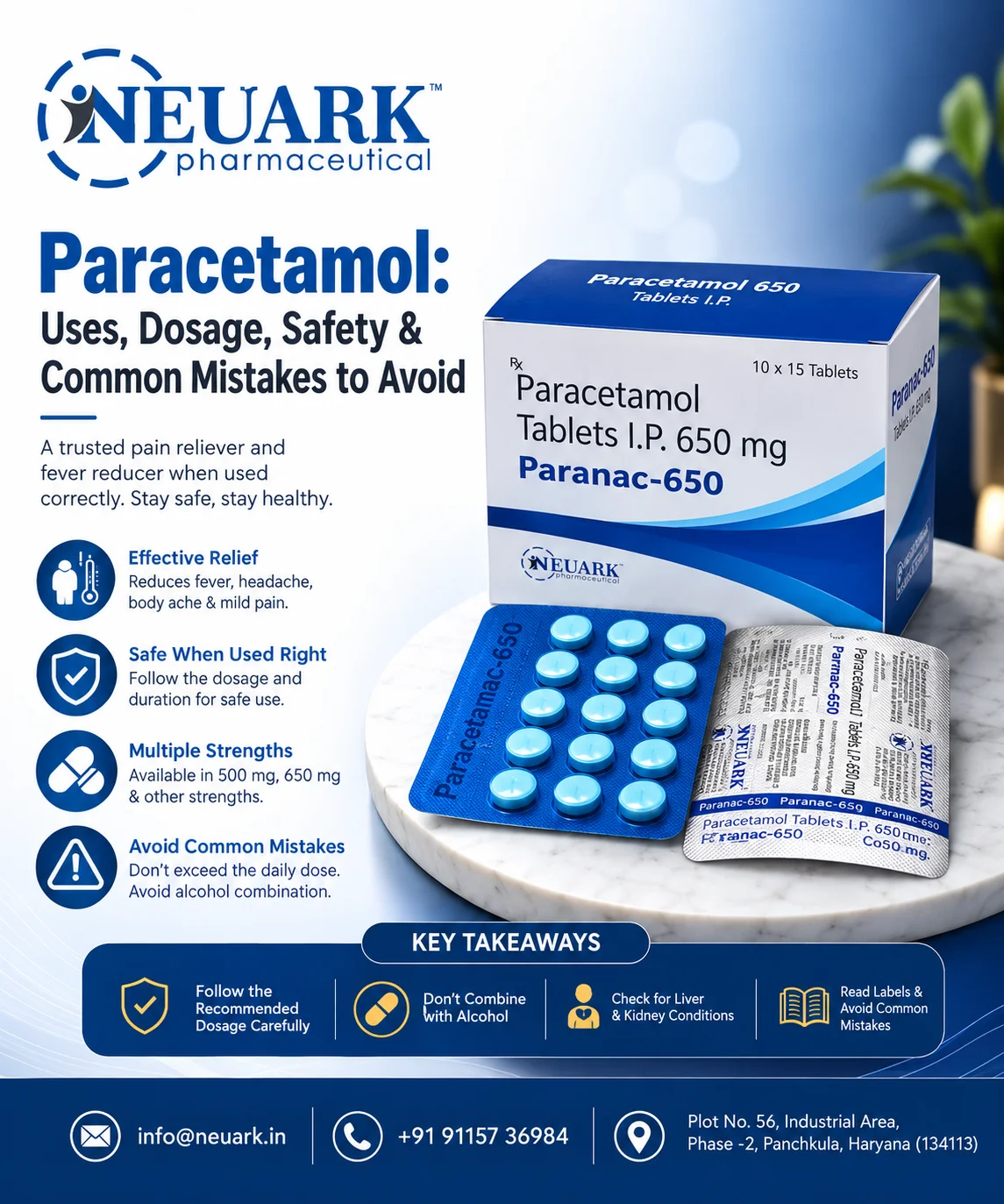
Paracetamol: Uses, Dosage, Safety & Common Mistakes to Avoid
Paracetamol: What It Is, When It Is Used & Common Mistakes to Avoid Fever, headache, body aches or a sore throat can make even an ordinary day difficult. During cold and flu season — and particularly during the monsoon, when fever and infections are common concerns — paracetamol is a medicine many people are familiar with. But familiarity can sometimes lead to careless use. Paracetamol can provide effective relief from pain and fever when used according to the recommended directions. At the same time, taking too much or unknowingly combining multiple medicines containing paracetamol can cause serious health problems. So, what exactly is paracetamol, when is it used, and what mistakes should you avoid? What Is Paracetamol? Paracetamol is a commonly used medicine for the temporary relief of pain and reduction of fever. It is known as acetaminophen in countries such as the United States. It is available in different forms and strengths, including tablets, capsules and liquid medicines. Paracetamol is commonly used to manage symptoms rather than treat the underlying cause of an illness. For example, it may help reduce a fever or headache associated with a viral illness, but it does not cure the infection causing those symptoms. It is also important to remember that paracetamol is not an antibiotic and should not be used as a replacement for treatment prescribed for a bacterial infection. When Is Paracetamol Used? Paracetamol may be used for short-term relief of common symptoms such as: Headache Toothache Sore throat Muscle aches Body aches Mild to moderate pain Fever Aches associated with cold or flu symptoms The appropriate product and dose can depend on factors such as age, body weight, the strength of the medicine and individual health conditions. Always check the product label or seek advice from a doctor or pharmacist if you are unsure. Paracetamol During Monsoon: Why Awareness Matters Monsoon weather can bring an increase in mosquito-borne illnesses and other infections in many regions. A fever accompanied by headache, body pain, nausea or rash should not automatically be assumed to be a simple viral fever. Dengue, for example, can cause high fever, headache, muscle and joint pain, nausea and rash. For people with suspected or confirmed dengue, the World Health Organization recommends paracetamol for managing fever and pain and advises avoiding medicines such as aspirin and ibuprofen because they can increase the risk of bleeding. However, paracetamol only helps manage symptoms. It does not treat dengue itself. Anyone with concerning symptoms should seek medical care rather than relying on self-medication. 7 Common Paracetamol Mistakes to Avoid 1. Taking Two Medicines That Contain Paracetamol One of the most effective ways to reduce mosquito breeding is to eliminate unnecessary standing water. Check your home and surroundings regularly for water collected in: Plant pots Buckets Containers Tyres Coolers Drainage areas Roof spaces Empty, clean or properly cover water-holding containers wherever possible. 2. Keep Water Storage Containers Covered If water must be stored, keep containers properly covered. Open containers can provide mosquitoes with an opportunity to lay eggs. Secure lids and proper storage can help reduce this risk. 3. Use Window and Door Screens Installing mosquito screens on windows and doors can provide a physical barrier between mosquitoes and family members. Check screens regularly for: Holes Loose edges Gaps Damaged frames Repair damaged screens promptly. 4. Wear Protective Clothing When mosquitoes are active, wearing clothing that covers the arms and legs can reduce exposed skin. For outdoor activities, consider: Long-sleeved shirts Full-length trousers Socks Appropriate footwear Light-coloured clothing can also make mosquitoes easier to spot. 5. Use Appropriate Mosquito Repellents Mosquito repellents can provide additional protection when used according to their product instructions. Depending on the product, repellents may be available as: Creams or lotions Sprays Other topical formulations Mosquito-repellent devices Always follow the label instructions and use products appropriately, especially around children. Paracetamol Dosage: Why One Number Does Not Fit Everyone Searching online for a single “paracetamol dosage” can be misleading. The appropriate amount can depend on: Age Body weight Product strength Formulation Other medicines being taken Liver or kidney health Other individual risk factors For example, NHS guidance gives specific instructions for common adult 500 mg tablets, while also noting that people weighing less than 50 kg may require a lower dose. Therefore, always follow the instructions for the exact product you are using rather than copying a dose from another medicine or another person’s prescription. For children, dosing is especially important because medicines may be selected and measured according to age, weight and formulation. Adult dosing should never simply be applied to a child. What Happens If You Take Too Much Paracetamol? An excessive amount of paracetamol can cause serious liver injury and, in severe cases, liver failure. One reason accidental overdosing happens is that people may unknowingly combine several medicines containing the same active ingredient. Possible warning symptoms can include nausea, vomiting, abdominal discomfort and later signs of liver injury such as yellowing of the skin or eyes. However, the absence of symptoms does not mean an overdose is safe. If you suspect an overdose, seek urgent medical attention. How to Use Paracetamol More Safely A few simple habits can make a significant difference: Read the label Check the active ingredient, strength, recommended dose and dosing interval. Check your other medicines Especially check cold, flu and pain-relief products for paracetamol or acetaminophen. Keep track of doses If you are taking medicine several times a day, recording each dose can help prevent accidental repeat dosing. Use the correct measuring device For liquid medicines, use the measuring syringe, spoon or cup supplied with the product rather than estimating the amount with a kitchen spoon. Ask a pharmacist If you are unsure whether two medicines can be taken together, a pharmacist can help identify duplicate ingredients. Don’t increase the dose yourself If your pain or fever is not improving, find out why rather than simply taking more medicine. Ready to Start Your Pharma Business? Get the Neuark Pharmaceutical Product Catalogue, Price List,
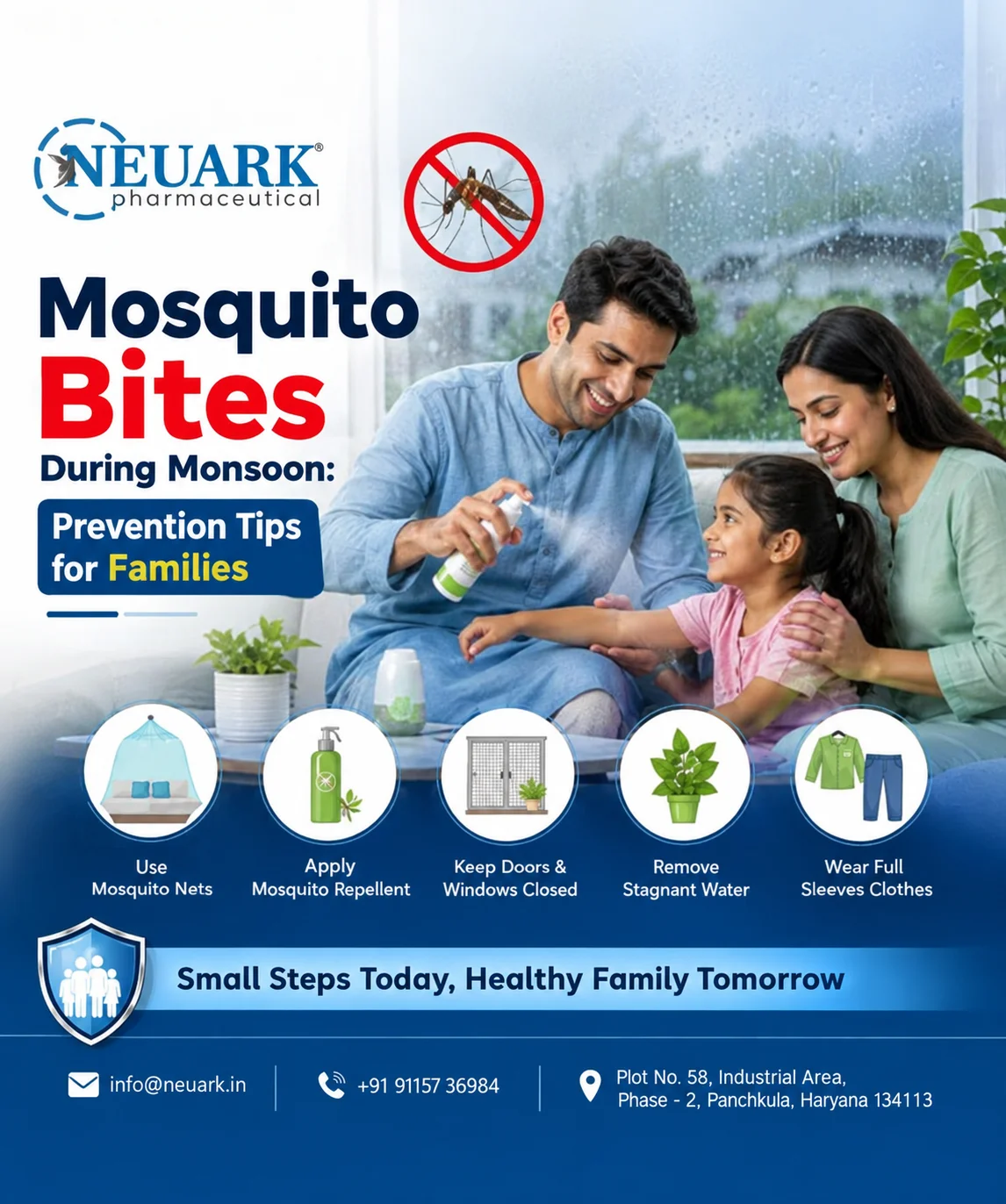
Mosquito Bites During Monsoon: Prevention Tips for Families
Mosquito Bites During Monsoon: Prevention Tips for Families The monsoon season brings relief from summer heat, but increased rainfall and stagnant water can also create favourable breeding conditions for mosquitoes. As mosquito populations increase, families may face a higher risk of mosquito bites and mosquito-borne illnesses. Understanding how to prevent mosquito bites during monsoon can help families reduce unnecessary exposure and maintain a healthier home environment. Simple measures such as removing stagnant water, using physical barriers, keeping surroundings clean and taking appropriate personal precautions can significantly reduce mosquito exposure. Why Do Mosquitoes Increase During Monsoon? Mosquitoes require water to complete their breeding cycle. During the rainy season, water can collect in places such as: Flower pots and plant trays Buckets and containers Discarded tyres Open tanks Coolers Drains and gutters Construction sites Roofs and other outdoor areas Even small amounts of standing water can provide suitable breeding conditions for some mosquito species. Regularly checking and removing stagnant water around the home is therefore an important part of monsoon mosquito prevention. What Health Problems Can Mosquito Bites Cause? Most mosquito bites cause temporary irritation, itching or redness. However, mosquitoes can also transmit certain infectious diseases. Depending on the mosquito species and local disease activity, mosquito-borne diseases may include: Dengue Malaria Chikungunya Japanese encephalitis Other mosquito-borne infections The symptoms and severity of these illnesses can vary. Fever, headache, body aches, unusual weakness or other concerning symptoms should not be ignored, particularly when mosquito-borne diseases are circulating in the community. 10 Ways to Prevent Mosquito Bites During Monsoon Several health conditions receive increased attention during the rainy season. Understanding their common symptoms and prevention measures can help people take timely action. 1. Remove Stagnant Water Regularly One of the most effective ways to reduce mosquito breeding is to eliminate unnecessary standing water. Check your home and surroundings regularly for water collected in: Plant pots Buckets Containers Tyres Coolers Drainage areas Roof spaces Empty, clean or properly cover water-holding containers wherever possible. 2. Keep Water Storage Containers Covered If water must be stored, keep containers properly covered. Open containers can provide mosquitoes with an opportunity to lay eggs. Secure lids and proper storage can help reduce this risk. 3. Use Window and Door Screens Installing mosquito screens on windows and doors can provide a physical barrier between mosquitoes and family members. Check screens regularly for: Holes Loose edges Gaps Damaged frames Repair damaged screens promptly. 4. Wear Protective Clothing When mosquitoes are active, wearing clothing that covers the arms and legs can reduce exposed skin. For outdoor activities, consider: Long-sleeved shirts Full-length trousers Socks Appropriate footwear Light-coloured clothing can also make mosquitoes easier to spot. 5. Use Appropriate Mosquito Repellents Mosquito repellents can provide additional protection when used according to their product instructions. Depending on the product, repellents may be available as: Creams or lotions Sprays Other topical formulations Mosquito-repellent devices Always follow the label instructions and use products appropriately, especially around children. How to Reduce Mosquito Breeding Around Your Home Mosquito prevention is not only about protecting yourself from bites. Reducing breeding sites is equally important. Follow a weekly mosquito-control routine: Inspect: Look for standing water. Empty: Remove water from unnecessary containers. Clean: Clean water-holding areas regularly. Cover: Keep water-storage containers covered. Dispose: Remove discarded objects that can collect rainwater. Maintain: Keep drains and surrounding areas appropriately maintained. This simple routine can help make your home environment less suitable for mosquito breeding. Mosquito Prevention Tips for Apartments People living in apartments should also pay attention to shared areas. Potential mosquito breeding locations may include: Terraces Parking areas Community gardens Water-storage areas Construction zones Drainage systems Plant containers Residents can work with building management or local authorities when persistent stagnant-water problems are identified. Mosquito Prevention Tips for Children Children can be particularly vulnerable to mosquito exposure because of outdoor play and limited awareness. Parents can encourage children to: Wear appropriate clothing outdoors Avoid playing near stagnant water Use suitable mosquito protection Sleep in mosquito-protected areas Inform an adult if they develop fever or feel unwell Teaching children these habits early can make mosquito prevention part of their normal routine. What Should You Do After a Mosquito Bite? Most mosquito bites cause mild local reactions such as: Itching Redness Mild swelling Temporary irritation Avoid excessive scratching because it can damage the skin and potentially increase the risk of secondary infection. Keeping the affected area clean and following appropriate general first-aid measures can help manage minor irritation. If symptoms are severe, unusual or persistent, consult a healthcare professional. When Should You Seek Medical Attention? A mosquito bite itself does not confirm that someone has a mosquito-borne disease. However, during periods of mosquito-borne disease activity, seek medical advice if someone develops concerning symptoms such as: Persistent or high fever Severe headache Significant body aches Repeated vomiting Unusual weakness Breathing difficulty Confusion Bleeding or unusual bruising Signs of dehydration Do not rely on self-diagnosis. A healthcare professional can determine whether testing or further medical evaluation is appropriate. Ready to Start Your Pharma Business? Get the Neuark Pharmaceutical Product Catalogue, Price List, and Franchise Details on WhatsApp and explore profitable PCD Pharma Franchise opportunities today. Start Your Franchise Journey Frequently Asked Questions About Monsoon Health Are mosquito bites more common during monsoon? Mosquito populations can increase during the rainy season because rainfall may create additional water-holding areas suitable for breeding. However, mosquito activity varies by species, location and environmental conditions. How can I prevent mosquito bites at home? Removing stagnant water, covering water containers, using window screens, wearing protective clothing and using appropriate mosquito repellents can help reduce mosquito exposure. Can mosquito bites cause dengue? Certain mosquito species can transmit dengue virus. A mosquito bite alone does not mean that a person has dengue. Symptoms such as fever and body aches should be evaluated by a healthcare professional when dengue is suspected. How often should stagnant water be removed? Water-holding areas should be checked frequently, particularly during the rainy season. Containers that can collect rainwater should be emptied,